
Squats
Squats are the foundation of any serious leg workout. A barbell squat trains your thighs, hips and bum in one movement, and it asks your abs and lower back to work hard to keep you upright. This guide covers why squats matter, which muscles they work, how to do them with correct form, and how many sets and reps to start with.
Plenty of people in the gym, especially younger lifters, train their chest and arms first and leave their legs until later, or skip them altogether. That is one of the biggest mistakes you can make. Squats build the base of your body. They improve your shape and posture, and strong legs make most other lifts feel steadier. Other people do squat, but with poor form, and end up injured. The steps below show you how to get it right.
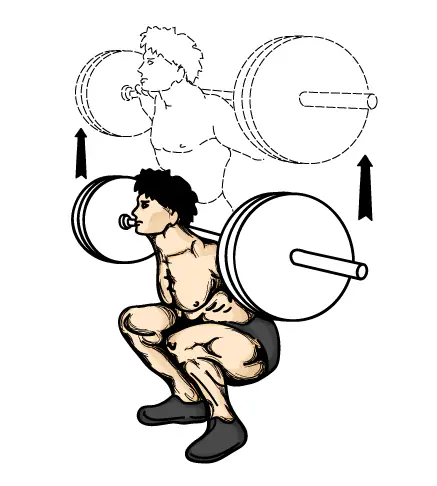
Why squats should come first on leg day
Because squats load so many muscles at once, they give you more return for your time than almost any other lower-body exercise. Make them a priority and do them near the start of your session, while you are fresh. Machine work such as the leg press or leg extension can follow afterwards.
With most exercises, good form matters more than the weight on the bar. With squats, form and weight matter equally. Once you have been training regularly for a while, a good long-term target is to squat 1.5 times your body weight in kilograms for at least one repetition. For example, if you weigh 70 kg (154 lb), that means a single rep with 105 kg (231 lb).
Treat that as a goal for experienced gym-goers rather than a starting point. If you are a beginner, or your main aim is to reduce your belly, put all your attention on correct form first. You can add weight once the movement feels natural.
Which muscles do squats work?
The main movers are the quadriceps at the front of your thighs and the gluteus maximus, the large muscle of your bum. Your hamstrings at the back of the thigh and the adductors on the inner thigh help, especially as you drive up from the bottom. Your calves keep your ankles steady throughout.
Squats also train your core. The muscles around your stomach and lower back brace to keep your spine straight under the bar, so squats firm up your middle as well as your legs.
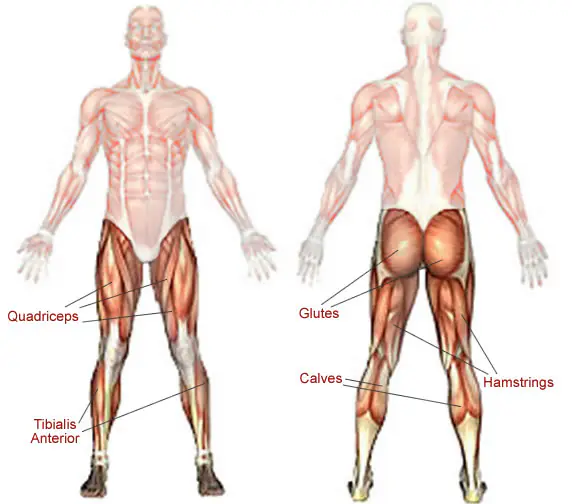
If you want to see where these muscles sit in the body, our muscle map shows the main groups from the front and back.
How to do a barbell squat with correct form
Setting up in the rack
- Start with a light weight, loaded equally on both sides of the bar. Set the bar in a squat rack at about shoulder height.
- Stand under the bar and rest it across the top of your shoulders, behind your neck.
- Make sure your neck sits at the midpoint of the bar so the load is balanced.
- Hold the bar firmly, lift it off the hooks and take a small step or two back, so you have enough space to squat.
The squat itself
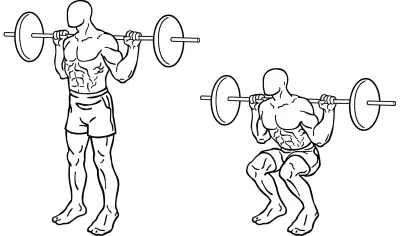
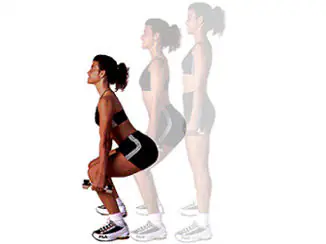
- Place your feet shoulder-width apart and level with each other. Point your toes forward and stand tall with your knees straight. This is your starting position.
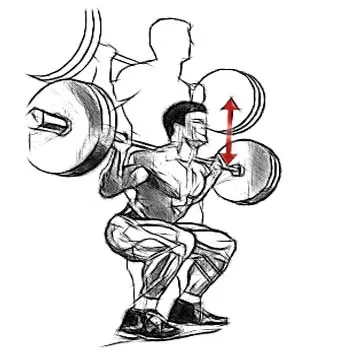
- Keep your back straight and your knees in line with your feet. Breathe in slowly and bend your knees and hips to lower yourself.
- Go down until your knees are bent to about a right angle, with your thighs close to parallel with the floor.
- Breathe out slowly and push back up through your thighs and heels.
- At the top, stop just short of locking your knees. Keep them very slightly bent, then begin the next rep.
Breathing and control
Breathe in on the way down and out on the way up. Take each rep at a steady pace rather than dropping into the bottom. A slow, controlled descent protects your knees and keeps the muscles working for longer. The same breathing pattern suits other big lifts such as the deadlift, where bracing your middle protects your lower back.
Common mistakes and safety tips
Most squat injuries come from too much weight, too soon. Motivation is good, but too much of it can push you into loads your body is not ready for. Start light and build up slowly over weeks.
- Always use a spotter. A training partner standing behind you can help you re-rack the bar if a rep goes wrong.
- Use the full range of motion. Half reps feel easier, but you get the best results by lowering yourself properly each time.
- Keep your heels down. If your heels lift, your weight shifts onto your toes and strains your knees.
- Do not let your knees cave in. Push them out so they track over your feet.
- Do not round your back. Keep your chest up and your eyes looking ahead.
Squatting on a Smith machine has its own risks. Our guide to five injury-prone gym exercises explains what to watch for.
How to check your own squat form
Filming yourself from the side is the easiest way to check your technique. Look at your set-up before each set, the depth of each rep and how upright your torso stays, then compare what you see with the steps above.
Heavy leg training also needs plenty of fuel. For one example of how a big lifter eats, read our John Cena diet plan.
How many sets and reps should you do?
Aim for 3 sets of 10 to 12 repetitions. Rest for one to two minutes between sets. When you can finish all three sets with good form, add a small amount of weight at your next session.
Squat once or twice a week, with at least a day of rest for your legs in between. Warm up first with five to ten minutes of light cardio and a set or two with an empty bar.
Once you are comfortable with the back squat, you can add variety. Front squats hold the bar across the front of your shoulders and put more work on the quads. Lunges train one leg at a time and help with balance. For more ideas, browse our leg exercises. If you are new to lifting, stick with the back squat on its own for a few weeks before you add the others.
More in Legs Exercises
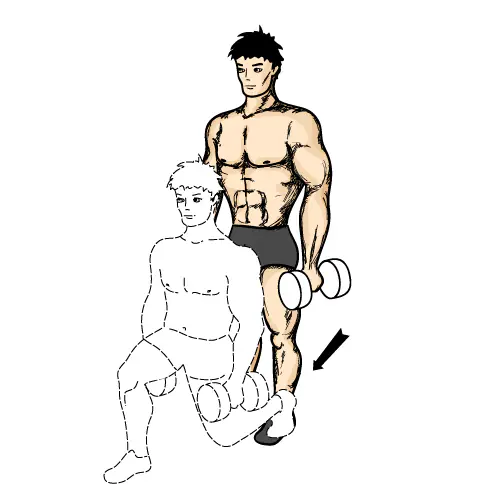
Lunges
Lunges are a simple, effective leg exercise that you can do with a pair of dumbbells or just your body weight. You step forward, lower your back knee towards the floor and…
Read more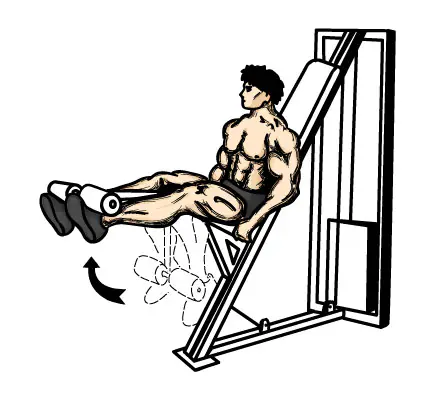
Leg Extension
The leg extension is one of the most common leg exercises in any gym. You sit on a machine with a padded lever in front of your shins and straighten your knees…
Read more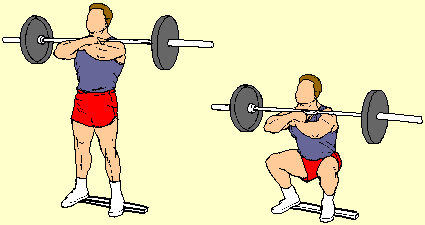
Front Squats
Front squats are a variation of the classic back squat that can help you build a strong, well-shaped lower body. The only real difference is where the bar sits. In a front…
Read more