
Leg Press
The leg press is one of the most popular ways to tone and build your legs. You sit in a machine and push a weighted platform away from your body using only your legs. It works the big muscles of the thighs and hips, and because your back is supported, it lets you train hard without balancing a bar on your shoulders.
Below you will find the muscles the leg press machine works and how to use it with correct form. Further down there are tips on avoiding the injuries people most often pick up on this machine, a video demonstration and a simple plan for sets and reps.
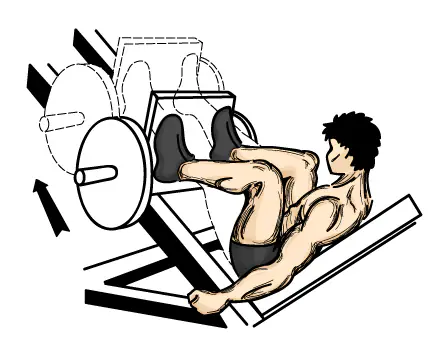
Which muscles does the leg press work?
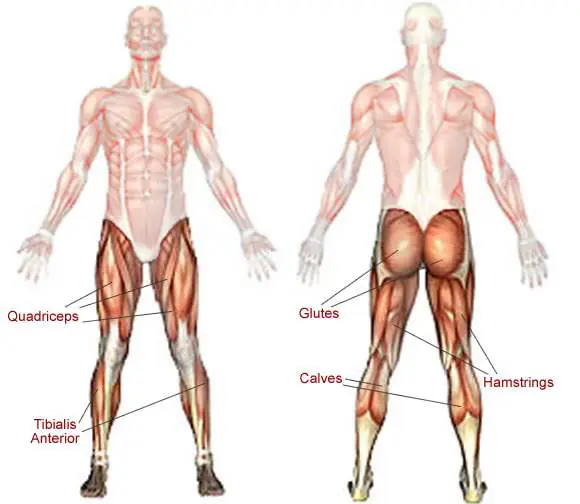
The leg press mainly targets three muscle groups. The quadriceps at the front of the thigh straighten your knee as you push. The hamstrings at the back of the thigh and the gluteus muscles in your bum extend your hip, especially in the lower part of the movement.
Your calves also work, although only partly. They help keep your feet steady on the platform. If you want to train the calves more directly, a separate calf exercise will do a better job.
Where the leg press fits in your leg workout
Many people use the leg press to test their lower-body strength, because the machine lets you move a lot of weight safely. If your goal is to build bigger leg muscles, it is an excellent choice. You can push close to your limit without worrying about your balance.
The leg press works best alongside free-weight exercises rather than in place of them. Squats train your core and balance in a way a machine cannot. A good order is squats first, while you are fresh, then the leg press to add extra volume. Lunges or leg extensions can round the session off.
Is the leg press good for beginners?
Yes, it is one of the easiest leg exercises to learn. The machine guides the platform along a fixed path, so you only need to think about your feet, your knees and your breathing. That makes it a useful way to build basic leg strength while you practise your squat technique with lighter weights.
If you have a knee or back problem, start with a very light load and a shorter range of movement. If anything hurts, as opposed to simply feeling hard work, stop and get advice from a GP or physiotherapist before carrying on.
How to use the leg press machine with correct form
As with every exercise, correct form comes before heavy weight. Pressing with poor technique is a common cause of joint pain, sprains and other injuries. Learn the movement with a light load first.
Setting up
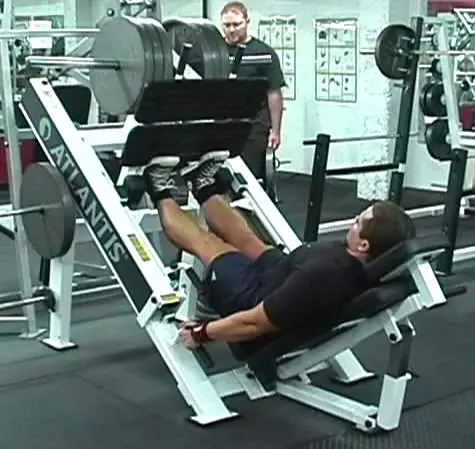
- Sit on the machine with your back and head resting against the backrest.
- Place your feet on the platform about shoulder-width apart.
- Point your toes straight ahead rather than turning them out at an angle. This helps to prevent knee injuries.
- Hold the handles at the sides of the machine tightly. A firm grip keeps your body still so the press stays smooth.
Pressing and lowering
- From your starting position, breathe out slowly as you press the platform away using the strength of your legs.
- Stop just before your knees are fully straight. Hold that top position for a second to feel the muscles working.
- Breathe in as you slowly let the platform come back towards you. Bend your knees until they reach about 90 degrees.
- Straighten your legs to push the weight up again, and repeat from the starting position.
Tips for safer, more effective presses
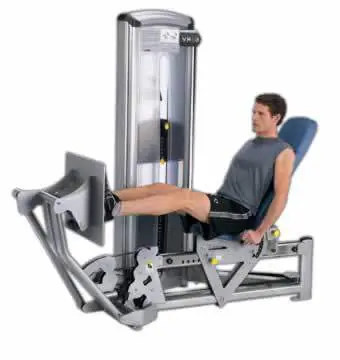
For the biggest muscle gains, push the weight with the balls of your feet and control it back down with your hamstrings. If you are unsure where those muscles sit, our map of the body's main muscles shows them from the front and back. Keep your feet flat on the platform throughout, so your heels never lift away.
Always make sure the platform is securely locked when you re-rack the weights. Check the safety catches before you get up from the seat.
Mistakes to avoid
- Lifting your head to watch the weight. Bending your neck forward puts strain on the joints of your neck. Keep your head back against the pad.
- Letting your bum rise off the seat. If you lower the platform too far, your hips tilt and your lower back takes the load. Stop at about 90 degrees.
- Locking your knees out. Snapping the knees straight under a heavy load stresses the joint. Keep a slight bend at the top.
- Loading too much too soon. The machine makes heavy weights feel manageable, which tempts people to rush. Add weight in small steps.
The leg press appears on our list of injury-prone gym exercises for exactly these reasons. Read it before you start pressing heavy loads.
Watch the leg press in action
This video shows the full movement. Notice how the lifter keeps their back flat against the pad and controls the platform on the way down.
How many sets and reps should you do?
If you are new to the leg press, start with 3 sets of 10 to 12 repetitions using a weight you can control comfortably. Rest for about a minute and a half between sets. When the last rep of each set feels easy, add a little more weight next time.
Before your first working set, do one lighter set of around 15 reps. This warms up your knees and hips and lets you check your foot position before the weight gets heavy.
Simple variations to try
Changing where you put your feet shifts the work slightly. Feet higher on the platform bring in more glutes and hamstrings. Feet lower put more emphasis on the quads, but they also increase the bend at your knees, so go carefully. You can also press with one leg at a time to even out any difference in strength between your sides.
Train your legs once or twice a week and warm up with five to ten minutes of light cardio first. For more exercises to pair with the leg press, see our leg exercises section and build a routine around the moves that suit you best.
More in Legs Exercises
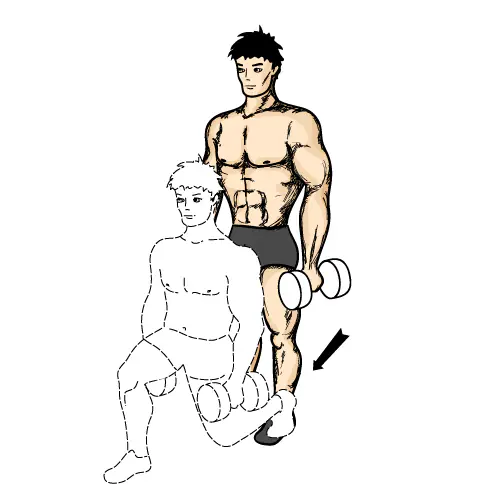
Lunges
Lunges are a simple, effective leg exercise that you can do with a pair of dumbbells or just your body weight. You step forward, lower your back knee towards the floor and…
Read more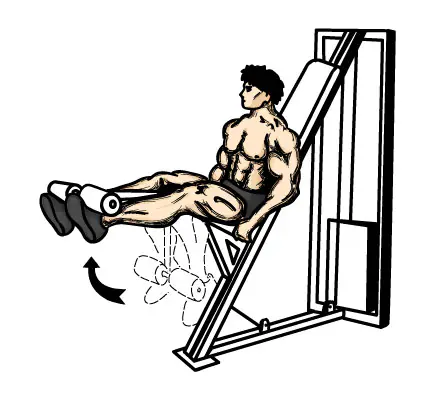
Leg Extension
The leg extension is one of the most common leg exercises in any gym. You sit on a machine with a padded lever in front of your shins and straighten your knees…
Read more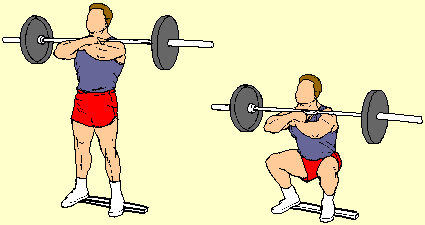
Front Squats
Front squats are a variation of the classic back squat that can help you build a strong, well-shaped lower body. The only real difference is where the bar sits. In a front…
Read more