
Body Mass Index Calculator
Body mass index, or BMI, is a quick way to check whether your weight is in a healthy range for your height. It divides your weight in kilograms by your height in metres squared. The answer is a single number that sorts adult weight into four broad groups: underweight, healthy weight, overweight and obese.
Our body mass index calculator below does the maths for you in metric or imperial units. Enter your height and weight, press Calculate, then read on to see what your number means, where BMI falls short and what to do next.
How to use the BMI calculator
First choose metric or imperial units. Metric uses centimetres and kilograms. Imperial uses feet, inches and pounds. Pick whichever you know best, as the result is the same either way.
Next, enter your height and weight in the boxes, then press the Calculate button above. Your BMI appears straight away, usually to one decimal place.
Getting accurate numbers
Your BMI can only be as accurate as the figures you type in, and a few habits help:
- Weigh yourself first thing in the morning, after using the toilet and before you eat or drink.
- Use the same scales each time and stand them on a hard, flat floor rather than carpet.
- Wear light clothes or none, and take off your shoes.
- Measure your height barefoot, standing straight with your heels against a wall.
- Rest a flat book on your head, mark the wall underneath it and measure from the floor to the mark.
Many people guess their height or use a figure from years ago. Adults can lose a little height with age, so an up-to-date measurement is worth the extra minute.
What does your BMI result mean?
Once you press Calculate, compare your number with the standard adult ranges in the table. These are the bands used by the NHS and most health bodies.
| Category | BMI range |
|---|---|
| Underweight | Below 18.5 |
| Normal (healthy) weight | 18.5–24.9 |
| Overweight | 25–29.9 |
| Obese | 30 or above |
Below 18.5
A BMI under 18.5 suggests you may be underweight. That can be linked to low energy, a weaker immune system and, over time, thinner bones. Some people are naturally slim and perfectly well, but it is worth looking at how much you eat.
18.5 to 24.9
This is the healthy weight range for most adults. If you land here, carry on with the habits that got you there, such as regular activity and balanced meals.
25 and above
A BMI of 25 to 29.9 counts as overweight, and 30 or more counts as obese. Carrying extra weight raises the risk of type 2 diabetes, high blood pressure, heart disease and joint pain. Losing even a modest amount of weight can lower those risks, and you do not have to reach the healthy range to feel the benefit.
How the BMI formula works
In metric units, BMI is your weight in kilograms divided by your height in metres, multiplied by itself. Say you weigh 70 kg (154 lb) and stand 1.75 m (5 ft 9 in) tall. Multiply 1.75 by 1.75 to get 3.06. Then divide 70 by 3.06, which gives a BMI of about 22.9.
The imperial version multiplies your weight in pounds by 703, then divides by your height in inches squared. For someone of 154 lb and 69 inches, that is 108,262 divided by 4,761, or roughly 22.7. The small gap comes from rounding the conversions.
If you track your weight in stones, convert it to pounds first by multiplying by 14. Our pounds to kilograms calculator is handy if you want to switch to metric.
Where BMI falls short
BMI is a useful screening tool, but it cannot see what your body is made of. It treats a kilogram of muscle the same as a kilogram of fat. That leads to some well-known blind spots.
Muscle and build
People who lift weights or play power sports often score as overweight while being lean. A rugby player with a lot of muscle can easily have a BMI over 25. If that sounds like you, our body fat calculator gives a better picture.
Where you carry fat
Fat stored around the middle carries more health risk than fat on the hips and thighs. BMI does not show this. A simple extra check is your waist: ideally it should be less than half your height. Measure it midway between your lowest rib and the top of your hips.
Ethnicity, age and life stage
Health risks start at a lower BMI for some groups. UK guidance suggests people of South Asian, Chinese, other Asian, Middle Eastern, Black African or African-Caribbean family background use lower cut-offs. For them, 23 or more counts as overweight and 27.5 or more as obese.
These adult ranges also do not apply to children and teenagers, whose BMI is compared with growth charts for their age and sex. The standard bands are not suitable during pregnancy either. In older adults, a slightly higher BMI is not always a concern, so it is best read alongside other checks.
What to do next with your number
A single reading tells you less than the trend over a few months. Look at that trend alongside your waist size and how your clothes fit.
If your BMI is above 25
Work out how much energy you need with our daily calorie intake calculator. Eating around 500 calories a day below that figure leads most people to lose about 0.5 kg (1 lb) a week. Our guide on how to lose weight safely and steadily has practical food and activity tips.
If your BMI is below 18.5
Aim to add healthy calories through regular meals and snacks, along with strength training to build muscle. Our guide to gaining weight sets out a sample day of eating.
When to see your GP
Book an appointment if your BMI is very low or 30 and above, or if your weight has changed a lot without a clear reason. Your GP can check your blood pressure, blood sugar and other markers that BMI cannot show.
Check your BMI every month or two rather than every day, as daily weight swings are mostly water. You can find our other free tools in the calculators section, so you can build a fuller picture of your health in a few minutes.
More in Calculators
Daily Energy Expenditure Calculator
Your daily energy expenditure is the number of calories your body uses in a day. A large part of it goes simply on keeping you alive: breathing, pumping blood, repairing cells and…
Read morePounds to Kilograms Calculator
To convert pounds to kilograms, multiply the number of pounds by 0.4536. One pound is exactly 0.45359237 kg, so 10 lb is about 4.54 kg and 100 lb is about 45.36 kg.…
Read more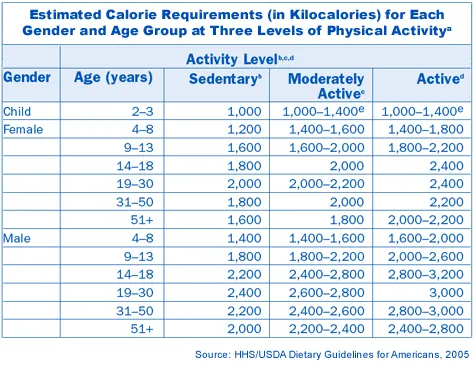
Daily Calorie Intake Calculator
Your daily calorie intake is the amount of energy you need from food and drink each day to stay fit and healthy at your current weight. As a rough guide, UK reference…
Read more