
Lunges
Lunges are a simple, effective leg exercise that you can do with a pair of dumbbells or just your body weight. You step forward, lower your back knee towards the floor and push back up. The main target is the quadriceps at the front of your thighs, with the glutes, hamstrings and calves helping out.
Lunges give visible results quickly, and many people notice firmer, more toned legs within a few weeks of regular training. Below you will find the muscles involved and how to do lunges with correct form. After that we look at where they belong in your leg workout and which variations to try once you have the basics.
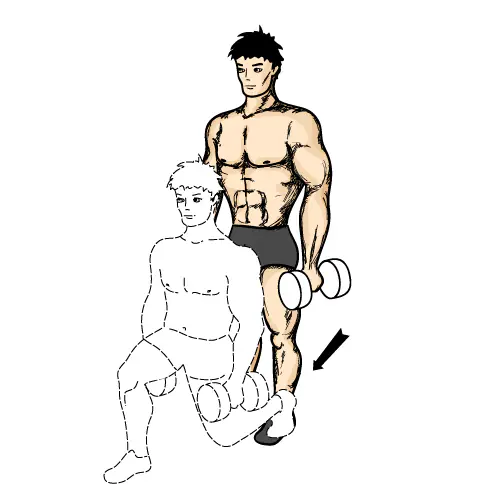
What muscles do lunges work?
Lunges work mainly the quadriceps, hamstrings and gluteus muscles. The quads do most of the work as you push up from the bottom. The glutes and hamstrings steady your hip and help drive you back to standing. Your calves work as secondary muscles, keeping your ankles stable.
Because several muscles work at the same time, the lunge counts as a compound exercise. It also trains each leg on its own. That improves your balance and shows up any difference in strength between your left and right side, which two-legged exercises can hide.
The movement also has a lot in common with everyday life. Climbing stairs, getting up from kneeling and stepping over things all use a similar pattern. Getting stronger at it in the gym tends to make those daily jobs feel easier.
Should lunges be your main leg exercise?
For most lifters, lunges work best as a supporting exercise rather than the base of the routine. Squats and the leg press let you move heavier weights with both legs, so they should be your primary exercises for building leg strength and size. Lunges then add extra work for each leg.
There is one common exception. Many women find lunges easier to learn than heavy squats or presses, and they are very good for defined, toned legs. If that is your goal, lunges can be your main leg exercise, with squats added as your confidence grows. Our leg exercises section has more moves to build around them.
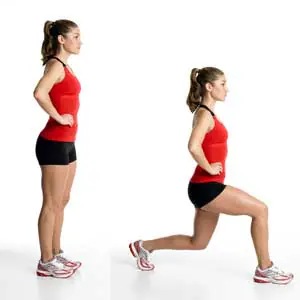
How to do dumbbell lunges with correct form
Never sacrifice correct form to lift heavier weights. Sloppy lunges can lead to muscle pulls and more serious injuries that could keep you out of the gym for weeks. Learn the movement first, then add load.
The starting position
- Pick up two dumbbells and let them hang at your sides, palms facing in.
- Stand tall with your torso upright, shoulders back and feet about hip-width apart.
The step and the return
- Step forward with your right foot. Leave a gap of about 60 to 90 cm (2 to 3 ft) between your front and back foot.
- Bend both knees and lower yourself until your right thigh is parallel to the floor and your left knee is almost touching the ground.
- Press mainly through the heel of your front foot to push yourself back up to the starting position.
- Repeat the movement with your left leg, and keep alternating legs for each rep.
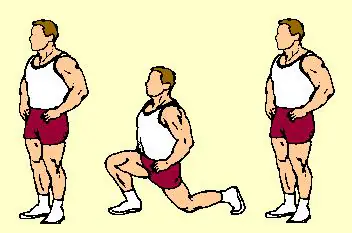
Breathing and common mistakes
Breathe in as you step forward and lower, then breathe out as you push back up. Keep your chest lifted and your eyes looking ahead throughout. You need the same tall posture for front squats, so practising one helps the other.
- Leaning forward. Tipping your upper body over the front leg puts strain on your lower back. Stay upright.
- Knee falling inwards. Keep your front knee in line with your toes rather than letting it drift towards the middle.
- Too short a step. A tiny step pushes your front knee far past your toes. Use the 60 to 90 cm gap as a guide.
- Banging the back knee. Lower under control so your knee stops just above the floor.
Lunges on video
The video below shows the movement in action. Watch it before your first session and compare your own form with what you see. Pay attention to the length of each step, how upright the upper body stays and how slowly the back knee lowers towards the floor.
Lunge variations that hit your legs from every angle
Try different lunge variations to work your leg muscles from different angles. Each one changes the balance of effort between the quads and glutes.
Bodyweight lunges
Doing lunges with no weights is the best way to learn the pattern. Rest your hands on your hips and focus on a smooth, steady rhythm before you pick up dumbbells. They need no equipment at all, so you can also do them at home on days when you cannot get to the gym.
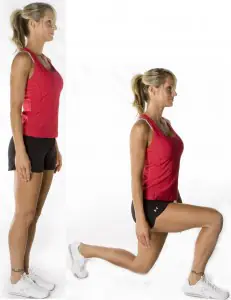
Reverse, walking and side lunges
In a reverse lunge you step backwards instead of forwards. Many people find this kinder on the knees. Walking lunges move you forward across the room with each step, which adds a balance challenge. Side lunges step out to the side and bring in the inner thigh muscles.
Once these feel comfortable, you can hold a barbell across your shoulders instead of dumbbells, or rest your back foot on a bench for a split squat. Both are harder, so only move on to them when your basic lunge is steady and pain-free.
How many sets and reps should you do?
Aim for 3 to 4 sets of 10 to 12 repetitions on each leg. Rest for about a minute between sets. Warm up first with a few minutes of light cardio and a set of bodyweight lunges.
Start with light dumbbells while your grip strength improves, then add weight gradually for the best results. When you can complete every set with good form, move up to the next pair of dumbbells. Your legs need time to recover, so leave at least one rest day between hard leg sessions. Some muscle soreness a day or two after your first workouts is normal and fades as your body adapts.
Train lunges once or twice a week, after your main exercise. A simple leg day might be squats, then the leg press, then lunges, finished with leg extensions.
More in Legs Exercises
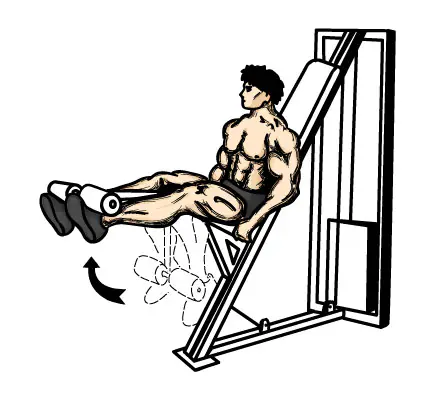
Leg Extension
The leg extension is one of the most common leg exercises in any gym. You sit on a machine with a padded lever in front of your shins and straighten your knees…
Read more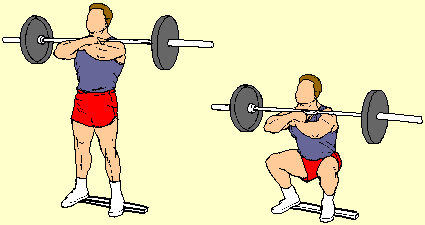
Front Squats
Front squats are a variation of the classic back squat that can help you build a strong, well-shaped lower body. The only real difference is where the bar sits. In a front…
Read more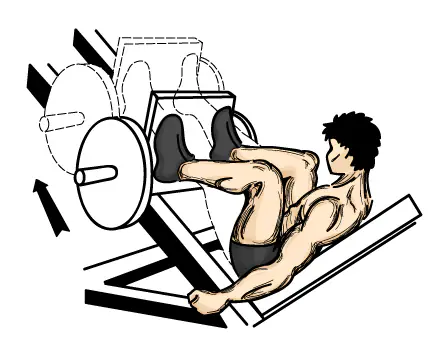
Leg Press
The leg press is one of the most popular ways to tone and build your legs. You sit in a machine and push a weighted platform away from your body using only…
Read more