
Leg Extension
The leg extension is one of the most common leg exercises in any gym. You sit on a machine with a padded lever in front of your shins and straighten your knees to lift it. It is an isolation exercise, which means it works one muscle group on its own: the quadriceps at the front of your thighs.
Almost every gym has a leg extension machine. They come in different shapes and styles, but they all target the same muscles in much the same way. Below you will learn where it belongs in a leg workout and how to do it with correct form, so you can build muscle without hurting your knees.
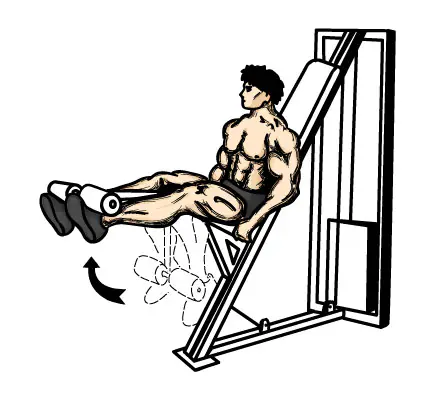
Which muscles does the leg extension work?
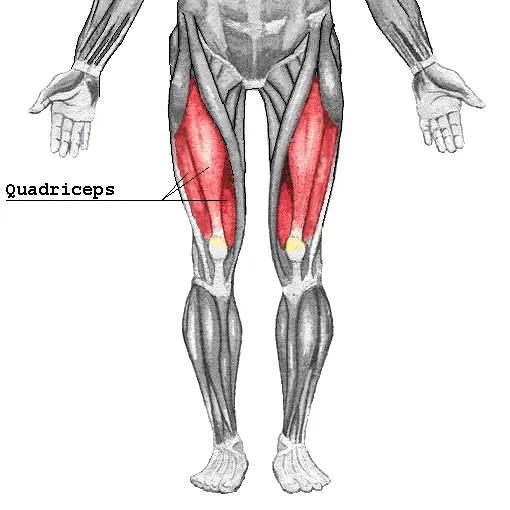
The leg extension works the quadriceps and very little else. The quads are a group of four muscles at the front of the thigh. Three of them run from the thigh bone to the knee, and one, the rectus femoris, also crosses the hip. Together they straighten your knee, which is exactly the movement the machine trains.
Because no other large muscles help, the quads take the full load, and you will feel a strong burn after only a few reps. It also makes the exercise useful for adding shape and definition just above the knee.
The vastus lateralis runs down the outside of the thigh and the vastus medialis down the inside. The vastus intermedius lies underneath, and the rectus femoris runs down the middle. The vastus medialis forms the "teardrop" shape just above the inner knee, which many bodybuilders try to bring out with this exercise.
Should leg extensions be your main leg exercise?
Leg extensions deserve a place in your leg workout routine, but they should not be your primary or complete workout for legs. Compound lifts such as squats and the deadlift work many muscles at once, including your glutes, hamstrings and core. They build more overall strength and size.
Think of the leg extension as a finishing exercise. Do your heavy compound lifts first, while you are fresh. Then use leg extensions to add extra work for the quads once the bigger muscles are tired. They are also handy for warming up the knees before squats, using a very light weight.
How to do a leg extension with correct form
As with every exercise, correct form comes before heavy weight. Use proper technique first, then focus on increasing the load. That way you get the most muscle growth and keep injuries away.
Adjusting the machine
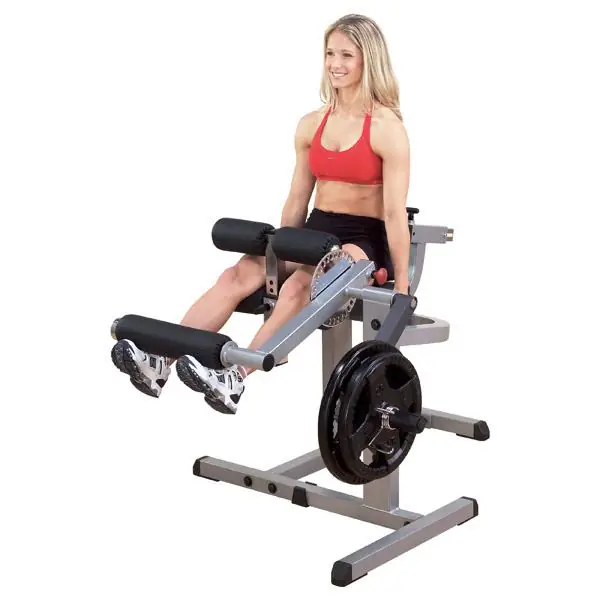
- Sit on the machine seat. Press your back flat against the backrest and keep it there throughout the movement.
- Adjust the pad so it rests on the front of your lower legs, just above your feet and well below your knees. Make sure the position feels comfortable.
- Line your knees up with the machine's pivot point, which is usually marked on the side.
- Set the weight pin to a suitable load and settle into your starting position.
Lifting the weight
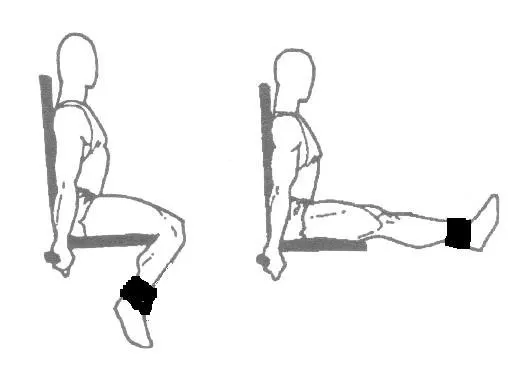
- Start with your knees bent at an angle of no more than 90 degrees. Bending them further at the start puts stress on the knee joint.
- Hold the support bars at the sides of the seat.
- Breathe out and move only your lower legs to lift the pad. Stop just before your legs are fully straight.
- Squeeze your quadriceps for a second at the top.
Lowering the weight
- Breathe in and slowly lower the weight in a smooth curling motion.
- Stop just before your knees return to a right angle, then begin the next rep.
- Keep the whole movement slow, steady and under control.
Watch a leg extension demonstration
This video shows the full movement. Notice how the lifter's back stays against the seat and how slowly the weight comes down.
Tips and warnings
Always warm up first
Never skip your warm-up before any leg exercise. Cold muscles are much more likely to pull, and an injury could keep you out of the gym for weeks. Our list of injury-prone gym exercises covers other common ways people get hurt. Ten minutes of cardio or a gentle jog is a perfect warm-up. Follow it with one light set on the machine.
Mistakes to avoid
- Swinging your upper body. Rocking your torso to heave the weight up takes the pressure off the quadriceps. Keep your back against the seat.
- Kicking the weight up. Fast, jerky reps use momentum instead of muscle and strain the knee. Lift and lower smoothly.
- Locking your knees. Stop just short of straight to keep tension on the muscle and off the joint.
- Going too heavy. The knee takes all the load on this machine. Start with light weights and increase them gradually.
If you already have a knee problem, check with a GP or physiotherapist before using heavy loads on this machine.
How many sets and reps should you do?
Aim for 3 to 4 sets of 10 to 15 repetitions. The higher rep range suits this exercise, because moderate weights and a slow tempo protect your knees while still working the quads hard. Rest for about a minute between sets.
When you can complete every set with good control, raise the weight by one plate at your next session. Train legs once or twice a week, with rest days in between.
Variations to try
Single-leg extensions work one leg at a time with a lighter weight. They are a good way to spot and correct a difference in strength between your two sides. You can also add a pause of two or three seconds at the top of each rep, which keeps the quads under tension for longer without needing a heavier load.
Many machines double as a leg curl station for the hamstrings. Pairing the two exercises keeps the front and back of your thighs in balance.
A balanced leg session might start with squats, move on to the leg press or lunges, and finish with leg extensions. Our leg exercises section has step-by-step guides for each of them, so you can build a full routine around the moves that suit you.
More in Legs Exercises
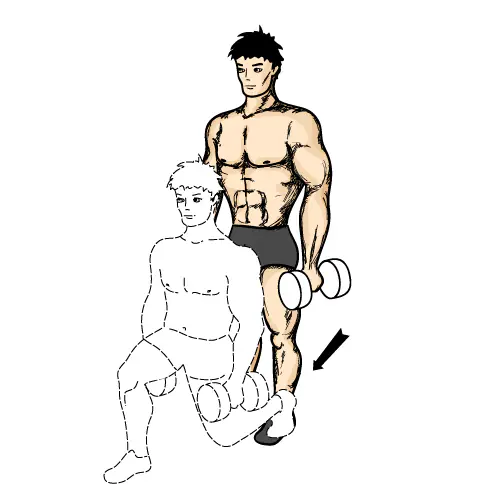
Lunges
Lunges are a simple, effective leg exercise that you can do with a pair of dumbbells or just your body weight. You step forward, lower your back knee towards the floor and…
Read more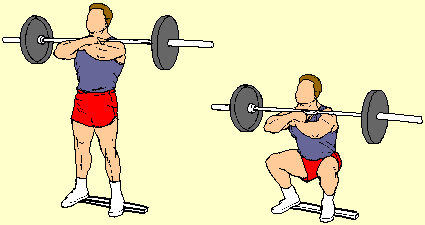
Front Squats
Front squats are a variation of the classic back squat that can help you build a strong, well-shaped lower body. The only real difference is where the bar sits. In a front…
Read more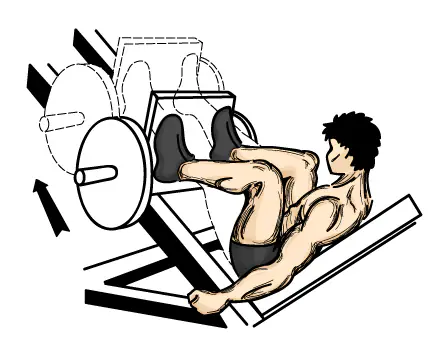
Leg Press
The leg press is one of the most popular ways to tone and build your legs. You sit in a machine and push a weighted platform away from your body using only…
Read more