
Cristiano Ronaldo Workout Routine
The Cristiano Ronaldo workout routine is built around football first and the gym second. He trains no more than five days a week, mixing long football sessions with cardio and targeted strength work. That combination gives CR7 the lean, powerful frame he is famous for.
Below you will find the sets and reps reported for his strength sessions and an explanation of how his six-pack comes about. There is also a simple plan for adapting his training if you play sport for fun rather than for a living.
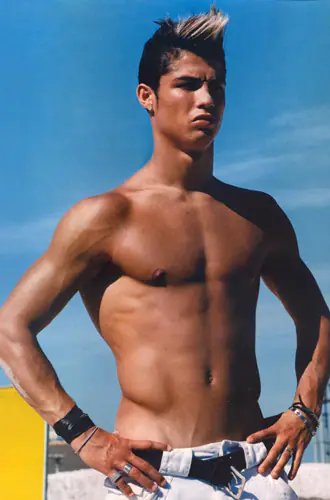
CR7's career at the time of writing
CR7, as the world knows him, was captain of the Portugal national team when this was written. He made his name at Manchester United and was part of their Champions League-winning side. He then moved to Real Madrid on a record-breaking contract worth 128 million dollars.
His career has had highs and lows. One recent high was leading Portugal to the semi-finals of the European Championship. In his club season for Real Madrid, he scored 60 goals and finished second behind Lionel Messi. Away from football, he has a child and was not married at the time of writing.

How often does Ronaldo train?
Like most professional athletes, Ronaldo trains for no more than five days a week. He is not a bodybuilder, so his plan is not about size. It combines cardio, strength training and ground-based work on the pitch, such as free kicks and general football practice.
That balance explains his build. Hours of running keep his body fat low, while the gym work adds enough muscle for speed, jumping and holding off defenders. His lean, athletic frame reflects endurance and strength in equal measure.
Football practice as his main workout
Football training is a passion for Ronaldo. Depending on his match schedule, a session lasts three to four hours and aims to build cardiovascular endurance and stamina. Sessions are led by penalty and free-kick practice and finish with a practice match.
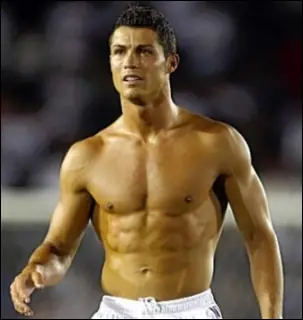
Football works as a form of interval training. You jog, sprint, stop, turn and jump over and over, which trains your heart, lungs and legs at the same time. You do not need three hours to benefit. A weekly five-a-side game or a 20-minute session of short sprints with walking recoveries gives you a taste of the same conditioning.
How did Ronaldo get his six-pack?
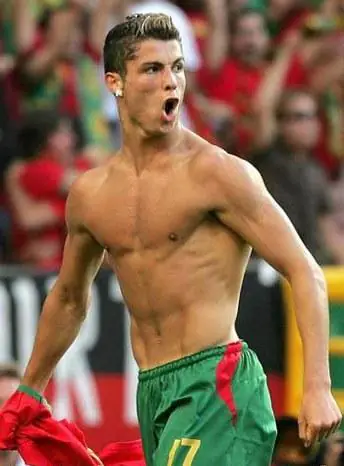
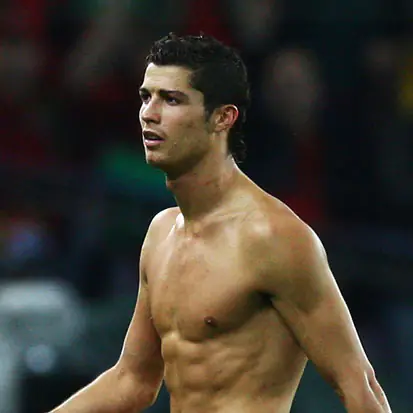
Ronaldo's six-pack shows because his body fat percentage is under 10%. He keeps it there through consistent training for three to five hours every day. His abs were not built by endless crunches or other isolated ab moves. Vigorous football practice does more for him than cardio machines or ab exercises on their own.
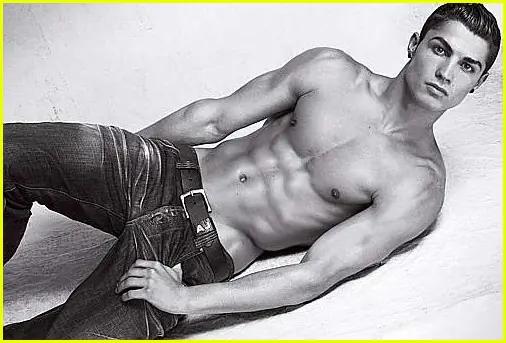
If you want visible abs and you do not play football, the same principle applies. Train with weights regularly and bring your body fat down through diet and activity. You can calculate your body fat percentage for free to see where you stand. Doing too many crunches will not reveal a six-pack, and overdoing them can hurt your lower back.
Be realistic about the number, though. Under 10% is very lean for a man and hard to hold all year round. Women naturally carry more body fat and should not aim for that figure. Losing fat slowly, at around half a kilo to a kilo (1–2 lb) a week, is safer and easier to keep off.
Ronaldo's strength training routine
Alongside football, Ronaldo does separate strength sessions, with exercises chosen for each muscle group.
Chest
- Dumbbell bench press: 5 sets of 5 reps
Five sets of five is a classic strength scheme. Low reps with a challenging weight build pushing power without adding much bulk. Rest for two to three minutes between sets so each one is done with good form. Dumbbells also make each arm work on its own, which helps to even out any imbalance between your sides.
Back
- Pull-ups: 3 sets of 15 reps
- Bent-over barbell rows: 3 sets of 10–12 reps
A strong back supports posture and helps protect the spine during sprints, tackles and jumps. Fifteen pull-ups in a row is a high target. If you cannot manage that yet, use a resistance band or an assisted machine, or do several smaller sets until you reach the same total. The lat pull-down trains the same muscles while you work up to it. On the rows, keep your back flat and pull the bar towards your lower ribs.
Legs
- Calf raises
- Squats
Squats build the thighs and glutes that power sprinting and shooting. Calf raises strengthen the lower leg for quick pushes off the ground.
Biceps
Arm work is a small part of a footballer's plan, though upper-body strength helps when you are shielding the ball. Keep your elbows tucked in and avoid swinging your back to lift the weight. A controlled two or three seconds on the way down does more for the muscle than a heavier, jerky rep.
Extra work for abs, forearms and traps
On top of this, Ronaldo works his abs with sit-ups and his forearms with barbell wrist curls. Shrugs are also added from time to time, which strengthen the trapezius muscles across the upper back and neck.
You can watch some of his training in the video below.
How can you train like a footballer at home or in the gym?
Ronaldo's volume is designed for a full-time athlete. For most people, three or four sessions a week is plenty. A simple way to borrow his approach looks like this:
- Two strength days: dumbbell bench press, pull-ups (or assisted pull-ups), rows, squats and calf raises, with 2–3 sets of 8–12 reps each.
- One or two sport or sprint days: a five-a-side match or short sprint intervals.
- Short ab and grip work: a few sets of sit-ups and wrist curls at the end of a session.
Warm up properly before sprinting, as cold hamstrings are easy to strain. If you are new to lifting, learn the movements with light weights and build up slowly. Rest at least one or two days a week. Eat enough protein, vegetables and wholegrain carbohydrates to support the extra training.
Give this plan a few months and you should find your stamina and leg strength steadily improving. For more strength exercises with correct form and videos, browse our bodybuilding section.
More in Male Celebs Workout
Shahrukh Khan Diet and Workout Tips
Shahrukh Khan, often simply called SRK or King Khan, is one of the most famous film stars in the world, with millions of fans following him wherever he goes. He is also…
Read more
Brock Lesnar Wokout
Brock Lesnar is a former WWE superstar with one of the most powerful and intimidating physiques in sport. This page sets out the Brock Lesnar workout routine as it was reported, day…
Read more
Batista Workout and Diet
The Batista workout is a three-day split built on moderate weights and plenty of sets, finished with 20 minutes of cardio. His diet is high in protein and low in fat, with…
Read more