
Standing Barbell Curls
Standing barbell curls are one of the most effective exercises for building bigger, better-shaped biceps. You hold a barbell with an underhand grip, keep your elbows still at your sides and curl the bar up towards your shoulders. It is a basic movement that works the biceps first and the forearms second.
We rate barbell curls 8.8 out of 10, and they make an ideal first exercise in a biceps workout. They are also easy to cheat on, so good form must come before heavy weight, both for muscle gain and for that pumped feeling in your arms. This guide shows you how to curl properly, which muscles you are training and how to choose sets, reps and bar type.
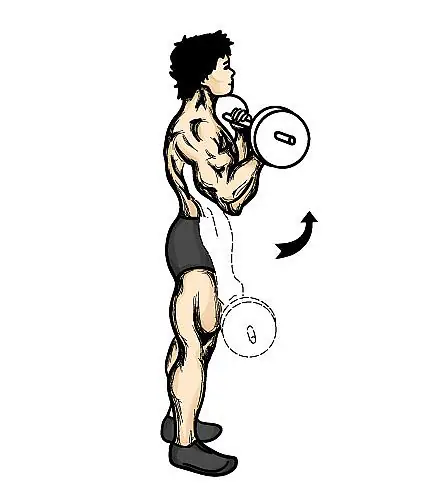
Why start your biceps workout with barbell curls?
With both hands on one bar, you can lift more weight than with almost any other curl. So the barbell curl is the best place to challenge your biceps with heavier loads while they are fresh. Lighter, more focused exercises can follow once the main work is done.
The fixed bar also keeps both arms working at the same pace. It gives you a stable, repeatable movement that is easy to track from week to week. If you curled 20 kg (44 lb) for 10 reps last week and manage 11 this week, you know you are getting stronger.
Barbell curl form, step by step
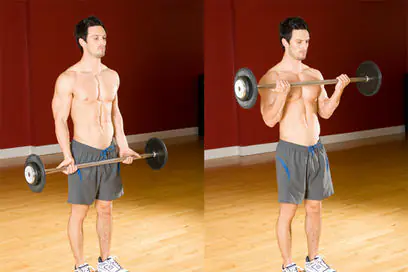
Setting up
- Load a barbell with a moderate weight on each side.
- Pick it up with an underhand grip, palms facing forward, hands about shoulder width apart.
- Stand straight with your feet shoulder width apart and your knees soft. Let the bar hang at arm's length against your thighs.
- Fix your elbows close to your torso. They should stay in this position for the whole exercise.
Curling and lowering
- Moving only your forearms, curl the barbell up using the strength of your biceps. Breathe out as you lift.
- Keep going until your biceps are fully contracted, with the bar near shoulder level. You should feel strong pressure in your biceps at this point.
- Slowly lower the barbell back to the starting position, again moving only your forearms. Breathe in on the way down.
- Straighten your arms fully at the bottom, then repeat.
Aim for 3–4 sets of barbell curls, with 10–12 reps in each set. Rest for 60 to 90 seconds between sets.
Pick a weight that makes the last two reps of each set hard while your form stays strict. If you are new to curls, start with an empty bar or a light fixed barbell for the first couple of weeks. That gives your elbows and wrists time to adapt. Once you can complete all your sets at 12 reps, add the smallest plates available.
How to check your curl technique
The simplest check is to curl side-on to a mirror, or to film a set on your phone. Your elbows should stay pinned to your sides and your body should stay still from start to finish. If your shoulders rock forward or your hips push out to help the bar up, the weight is too heavy. Practise a slow, even pace with a light bar first.
Which muscles do barbell curls work?
The main muscle is the biceps brachii, the two-headed muscle at the front of your upper arm. It bends your elbow and turns your palm upwards. A fixed underhand grip keeps your palms turned up throughout, so the biceps stay heavily involved from start to finish.
Underneath the biceps sits the brachialis, which also helps bend the elbow. Your forearm muscles work as secondary movers and grip the bar. Your shoulders, core and lower back hold your body steady while your arms do the work.
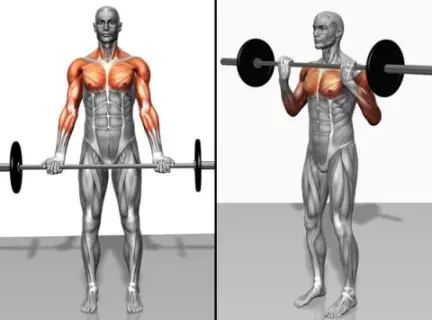
Check our muscle map for details of these muscles and where they sit in your body.
Why does swinging the bar hold you back?
The most common mistake is lifting too much weight and using body momentum to swing the barbell up. When you lean back or kick your hips forward, your lower back and shoulders take over. Your biceps miss out on much of the work, and your back is put under strain.
Use a lighter weight and keep the movement slow and controlled. Your biceps then spend more time under tension and you get a better pump. Watch out for these other habits too:
- Elbows drifting forward. If your elbows move ahead of your body at the top, your front shoulders start lifting the bar.
- Dropping the bar. Letting it fall back down wastes the lowering half of each rep, which is valuable for growth.
- Half reps. Stopping short at the bottom means your biceps never work through their full range.
- Bent wrists. Keep your wrists straight and in line with your forearms to avoid strain.
Straight bar or EZ bar?
A straight Olympic or fixed barbell keeps your palms fully turned up. It puts the most work on the biceps, although some people find it uncomfortable on the wrists and elbows.
Trying the EZ bar
An EZ bar has gentle bends in it. Your hands sit at a slight angle, which many people find easier on the joints. It works the same muscles, so if a straight bar causes discomfort, the EZ bar is a sensible swap.
Changing your grip width
Shoulder-width hands suit most people. A slightly narrower grip tends to stress the outer part of the biceps a little more, while a slightly wider grip shifts the effort towards the inner part. Small changes like these let you vary your training over time without learning a new exercise.
Building a biceps workout around it
Start with barbell curls while your arms are fresh. Then add a second exercise that works each arm on its own, such as standing dumbbell curls or hammer curls. Finish with concentration curls for a strong squeeze at the top. Train your biceps once or twice a week and add a little weight only when every rep is clean.
Your triceps make up a large part of your upper arm too. Pairing your curls with a triceps exercise such as triceps press downs keeps your arms balanced and gives them a fuller look. Your biceps also work during back exercises like rows and pull-ups, so leave a day between a heavy back session and arm day.
More in Biceps Exercises
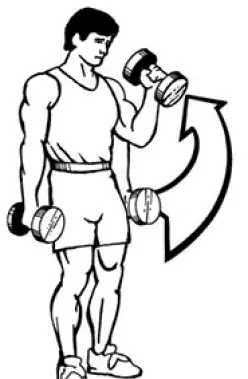
Dumbbell Hammer Curls
Dumbbell hammer curls are a basic curl in which you hold the dumbbells with your palms facing each other, like gripping a hammer. That simple change of grip spreads the work between…
Read more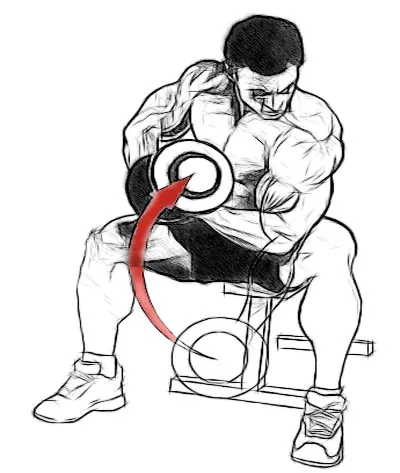
Concentration Curls
Dumbbell concentration curls are an isolation exercise for the biceps. You sit on the end of a bench, brace one arm against your inner thigh and curl a single dumbbell up towards…
Read more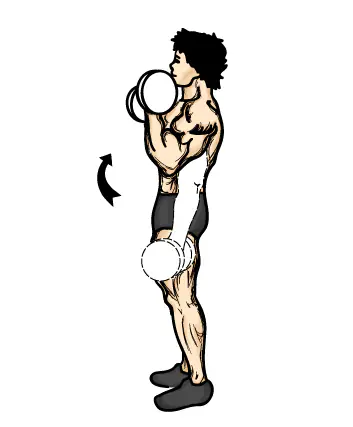
Standing Dumbbell Curls
Standing dumbbell curls are a simple, effective biceps exercise that you can do almost anywhere. You stand with a dumbbell in each hand, keep your elbows by your sides and curl the…
Read moreComments (4)
Show / hide
Comments are closed. These comments were preserved from the original site.
#1 Adriana
thanks for share!
#2 sem calcinha
it pumps the biceps..
#3 Deusa
your blog’s design is simple and clean and i like it. your blog posts are superb. please keep them coming. greets!!!
#4 Angelita
great it’s a cool stuff