
Triceps Press Down
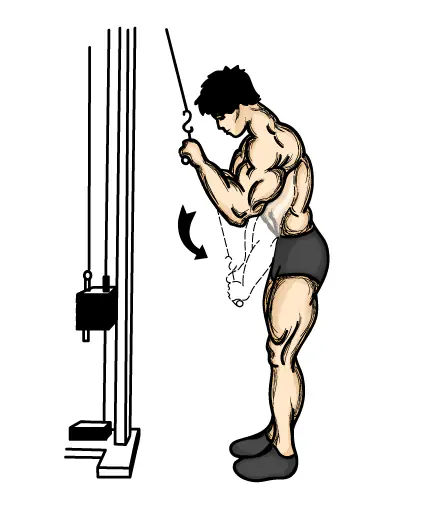
The triceps press down, also called the triceps push down, is one of the most common exercises you will see in any gym. You stand at a cable machine, hold a short bar attached to the high pulley, and push it down by straightening your elbows. It is an isolation exercise, which means it targets the triceps on their own, and it can pump up the backs of your arms when done with correct form.
Of all the triceps exercises, this is one of the easiest to learn, yet it can still help you build big triceps. We rate it 9 out of 10. This page covers the muscles worked, how to set up the cable, the correct form, the best attachments and how to build a triceps workout around it.
What muscles does the press down work?
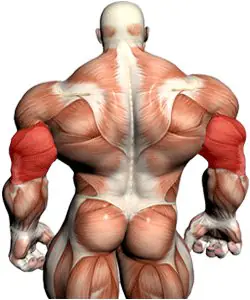
This basic arm movement stresses the entire triceps muscle group. The triceps has three heads: the long head, the lateral (outer) head and the medial head. The press down works the outer and medial heads in particular. These are the parts that give the back of the arm its horseshoe shape when viewed from the side.
Because your upper arms stay by your sides, the long head is not stretched as much as it is in overhead or lying exercises. For that reason, the press down works best alongside a movement such as lying barbell triceps extensions, which hits the long head harder. Your forearms, shoulders and core also work lightly to hold your body steady.
Setting up the cable station
Attach a short straight bar or angled bar to the top pulley of a cable machine. Set the pin to a medium weight, one you could push down for around 15 reps without strain on your first set.
Stand close to the machine, facing it, with your feet about hip width apart. Some people prefer one foot slightly in front of the other for balance. Grab the bar with an overhand grip, your index fingers no more than 13 cm (5 in) apart. Pull the bar down until your elbows are tucked in at your sides, ready to start.
Correct form matters more than heavy weights. It is what leads to maximum muscle and shape, so get the technique right before you move up the stack.
Triceps press down exercise: correct form
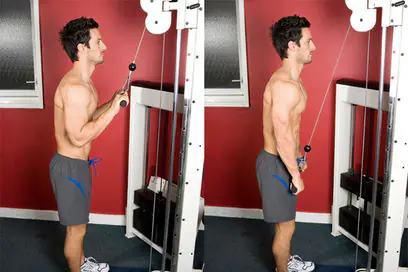
- Keep your back straight throughout the exercise, with your chest up and shoulders relaxed.
- Lean slightly forward from the hips.
- Breathe out and slowly push the bar down until your arms are fully straight. Move only your forearms and keep your upper arms fixed at your sides.
- Hold the straight-arm position for a second and squeeze the backs of your arms.
- Breathe in as you let the bar rise until your forearms are parallel to the floor.
- Repeat for the planned number of reps.
Keep the movement slow and controlled from start to finish. The cable should never yank your hands upwards.
Which attachment and grip should you use?
For variety, try the press down with different grip widths and bar shapes. Each one changes the feel of the exercise slightly and can help you get past a plateau.
Straight bar
The straight bar is the classic choice. It lets you lift the most weight, though some people find it puts strain on their wrists.
V-bar or angled bar
The angled handles let your wrists sit in a more natural position. Many lifters find this the most comfortable option for heavier sets.
Rope
With a rope, you can pull your hands apart at the bottom of each rep. This gives a stronger squeeze in the outer head of the triceps. Expect to use a little less weight than with a bar.
Reverse grip
Holding a straight bar with your palms facing up shifts more of the work to the medial head. Use a lighter weight, as this grip feels much harder.
Single-arm press down
Fit a single handle to the pulley and work one arm at a time. This lets you check that both arms are doing equal work, and it is a good fix if one triceps is noticeably weaker. Finish all your reps on one side before switching, just as you would with dumbbell triceps kickbacks.
Common press down errors
- Elbows drifting forward. If your elbows move away from your sides, your shoulders and lats start helping. Pin them in place.
- Leaning over the bar. A slight forward lean is fine. Folding your body over the bar lets your body weight push it down instead of your triceps.
- Letting the bar fly up. Bringing the bar up past chest height takes tension off the triceps and stresses the elbows. Stop when your forearms are parallel to the floor.
- Half reps at the bottom. Lock your arms out fully on every rep. The squeeze at the bottom is where the triceps work hardest.
Building a triceps workout around the press down
A standard plan is 3 to 4 sets of 10 to 12 repetitions, resting about a minute between sets. Because the cable keeps tension steady and you can change the weight quickly, the press down is easy to progress. Add one plate on the stack when you can complete every set with clean form.
It can be the first triceps exercise for beginners, as it is easy to learn and gentle on the joints. More experienced lifters often use it after a heavy compound lift. A balanced triceps workout might look like this:
- Close grip bench press: 3 sets of 8 to 10 reps.
- Lying barbell triceps extensions: 3 sets of 10 reps.
- Triceps press down: 3 sets of 12 reps.
- Triceps kickbacks: 2 sets of 12 reps on each arm.
Train your triceps once or twice a week. They also work hard during chest pressing, so allow for that when you plan your week. If your elbows ache, do one light warm-up set of 15 to 20 reps first and try the rope or V-bar instead of a straight bar. For more ideas, see our triceps exercises section.
More in Triceps Exercises
Triceps Kickbacks
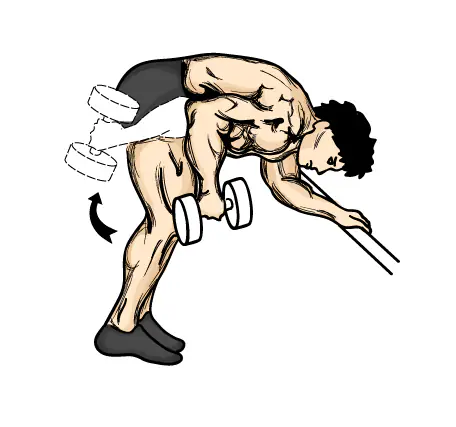
Triceps kickbacks are a single-arm isolation exercise for the back of the upper arm. You lean on a bench with one hand and one knee, hold a dumbbell in the other hand,…
Read more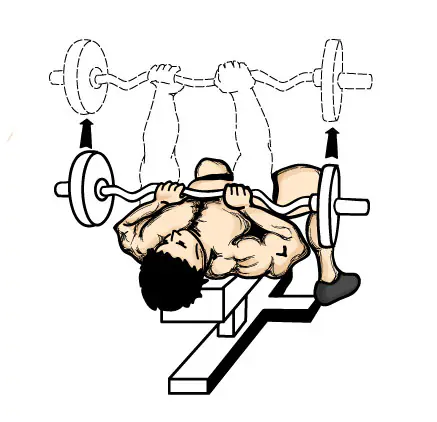
Close Grip Bench Press
The close grip bench press is a barbell press done with your hands closer together than in a normal bench press. That small change moves much of the work from your chest…
Read more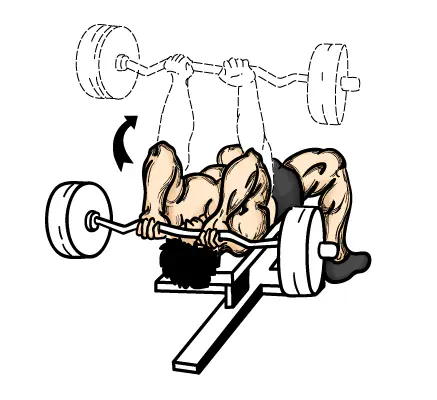
Lying Barbell Triceps Extensions
Lying barbell triceps extensions are an isolation exercise for the back of the upper arm. You lie on a flat bench, hold a barbell above your chest and bend only at the…
Read moreComments (1)
Show / hide
Comments are closed. These comments were preserved from the original site.
#1 Homey
very nice post, thanks