
Dumbbell Hammer Curls
Dumbbell hammer curls are a basic curl in which you hold the dumbbells with your palms facing each other, like gripping a hammer. That simple change of grip spreads the work between your biceps, the muscle underneath it and your forearms. Over time it builds thicker-looking arms and a stronger grip, which is why many people count the hammer curl among the best biceps exercises.
We rate dumbbell hammer curls 9 out of 10, and they make a good opening exercise for an arm workout. As with every curl, proper technique matters more than heavy weight. This guide explains what the hammer grip changes, how to perform the exercise step by step, the muscles it builds and how to fit it into your routine.
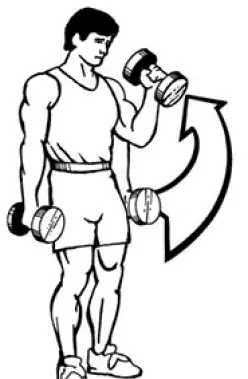
What does the hammer grip change?
In a normal curl, your palms face up. In a hammer curl, they face inwards towards your body for the whole movement. This is called a neutral grip.
With your palms turned up, the biceps do most of the lifting. With a neutral grip, two other muscles take on a bigger share. One is the brachialis, which lies under the biceps. The other is the brachioradialis, the large muscle along the top of your forearm. Training them adds thickness to the arm when seen from the front and from the side.
Many people also find the neutral grip kinder to their wrists and elbows. If standard curls leave your joints feeling sore, hammer curls are often a comfortable alternative. They tend to let you handle slightly heavier dumbbells as well, because more muscles are helping.
The neutral grip is how you naturally hold heavy things in daily life. Carrying shopping bags, a suitcase or a bucket of water all rely on the same muscles. Stronger forearms and a firmer grip make those everyday jobs easier, and they help with other gym lifts such as rows and deadlifts.
Hammer curl form, step by step
Getting ready
- Pick up a pair of dumbbells of moderate weight.
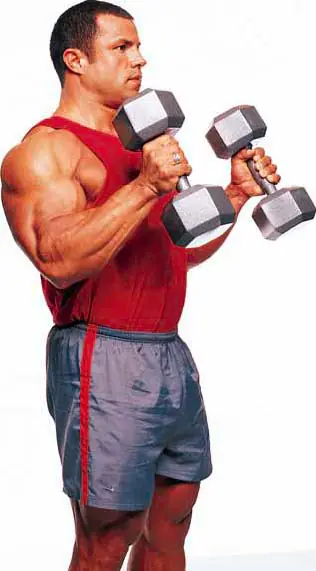
- Stand straight with your feet shoulder width apart and your knees soft.
- Let the dumbbells hang by your sides with your palms facing each other, or facing your thighs.
The lift and the lower
- Keeping your palms facing each other, squeeze your biceps and curl the weights up to shoulder level. Breathe out as you lift.
- Do not move your elbows while curling. They should stay tucked in at your sides.
- At the top you will feel strong pressure in your biceps. Hold for a moment.
- Slowly lower the weights back to the starting position, breathing in.
- Repeat all the steps. Do 3–4 sets of 10–12 reps each.
Your wrists should stay straight throughout, with your thumbs pointing up. Picture the dumbbells as hammers and lift them without letting the heads tip forward.
Hammer curls on video
The video below demonstrates the full movement. Watch how the grip stays neutral from bottom to top, then try a light set to practise the pace before you pick up your working weight.
Which muscles do hammer curls build?
Hammer curls target the biceps and forearms, with extra help from the muscle hidden beneath the biceps.
Biceps brachii
This is the familiar muscle on the front of your upper arm. It still does a large part of the work in a hammer curl, even though the grip is neutral.
Brachialis
The brachialis sits underneath the biceps and is a powerful elbow bender. As it grows, it can push the biceps up slightly, which helps your arm look fuller.
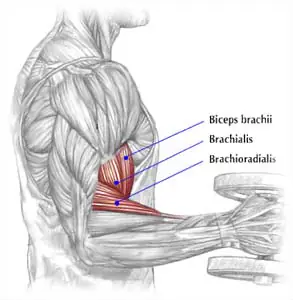
Brachioradialis and forearms
The brachioradialis runs from the upper arm down the thumb side of your forearm. Hammer curls work it more than most curls, and the rest of your forearm works hard to grip the dumbbells, so the exercise also builds grip strength.
Check our muscle map for details of these muscles and their positions in your body.
Common mistakes and how to fix them
Do not lift weights that are too heavy and then use body momentum to swing the dumbbells up. Choose a lighter weight and concentrate on correct form. Watch for these other faults too:
- Moving the elbows. If your elbows travel forward, your shoulders start to lift. Keep them pinned to your sides.
- Turning the wrists. Letting your palms rotate up turns the exercise back into a normal curl. Keep the thumbs pointing to the ceiling.
- Leaning back. Your body should stay upright and still from the first rep to the last.
- Dropping the weights. Lower the dumbbells over about two seconds rather than letting them fall.
A little muscle soreness a day or two after training is normal. Sharp pain at the elbow or wrist during the movement is not. If that happens, stop the set and try a lighter weight. If the pain keeps coming back, get it checked by your GP or a physiotherapist before you carry on.
How should you fit hammer curls into your routine?
Hammer curls work well near the start of an arm workout, while you are fresh enough to use a moderate weight. A simple session might begin with hammer curls, then move to standing dumbbell curls and finish with concentration curls. Rest for 60 to 90 seconds between sets, and train your arms once or twice a week.
Variations to try
Alternating hammer curls, where you lift one arm at a time, let you focus on each side in turn. Cross-body hammer curls bring the dumbbell up towards the opposite shoulder, which shifts more work onto the brachialis. In the gym, a rope attachment on a low cable gives you the same neutral grip with steady tension.
To choose your starting weight, pick dumbbells you could lift about 14 or 15 times with good form. Doing 10–12 reps with them should then feel challenging but clean. Because hammer curls only need a pair of dumbbells, they are easy to do at home on days you cannot reach the gym.
Add a little weight only when you can complete all your sets at 12 strict reps. For more arm-building ideas, browse our full range of biceps exercises.
More in Biceps Exercises
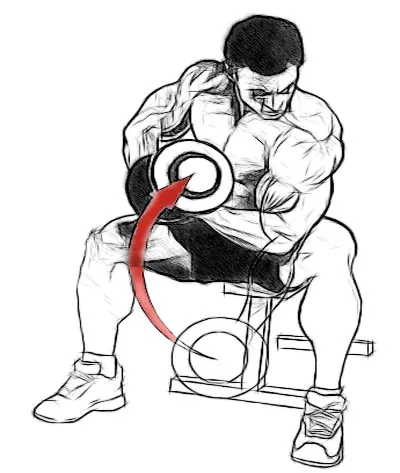
Concentration Curls
Dumbbell concentration curls are an isolation exercise for the biceps. You sit on the end of a bench, brace one arm against your inner thigh and curl a single dumbbell up towards…
Read more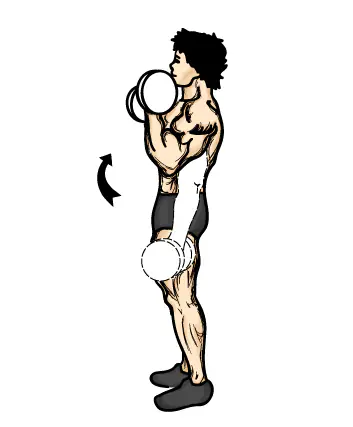
Standing Dumbbell Curls
Standing dumbbell curls are a simple, effective biceps exercise that you can do almost anywhere. You stand with a dumbbell in each hand, keep your elbows by your sides and curl the…
Read more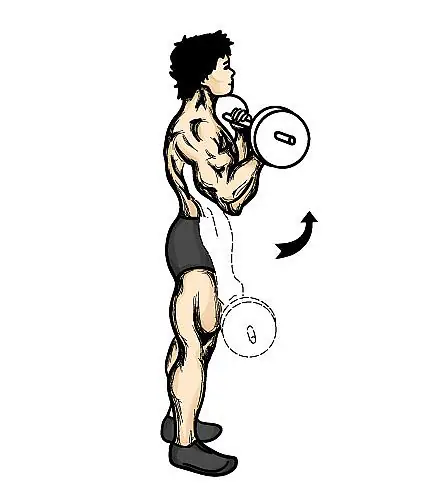
Standing Barbell Curls
Standing barbell curls are one of the most effective exercises for building bigger, better-shaped biceps. You hold a barbell with an underhand grip, keep your elbows still at your sides and curl…
Read moreComments (3)
Show / hide
Comments are closed. These comments were preserved from the original site.
#1 Free backlinks
Hello
#2 Fritz Shibley
very nice post, thanks
#3 gifty
very nice post, thanks