
Seated Cable Rows
Seated cable rows are one of the most reliable ways to build a thicker, stronger back. You sit at a low cable station, pull a V-bar handle towards your stomach and let it back out under control. The movement is simple, yet it trains a large group of back and arm muscles at once, and beginners can learn it safely.
We rate the cable row 9 out of 10 and count it among the best back exercises for developing the lats. It only pays off with good technique, though. Many people jerk the weight and throw their body backwards to move it, which brings little muscle gain and can lead to back injuries. This guide shows you how to row properly, what to avoid and how to fit the exercise into your week.
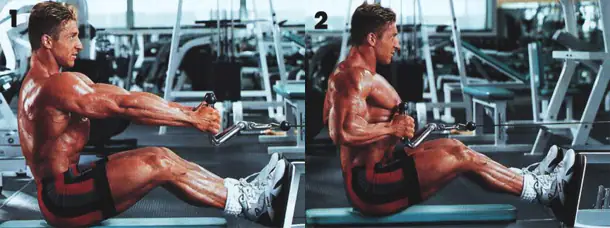
What do you need for a seated cable row?
All you need is a seated rowing machine, often called a low cable row station, fitted with a V-bar handle like the one in the picture above. The V-bar gives you a close, neutral grip with your palms facing each other. That grip is kind to the wrists and lets you drive your elbows tight past your sides.
Most machines have a padded seat and a footplate. Your feet press against the plate so you can brace without sliding forward. If your gym only has a cable tower, sit on a low bench in front of the bottom pulley and you will get much the same effect.
Correct form, step by step
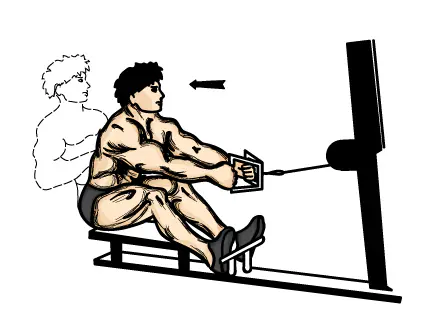
Setting up
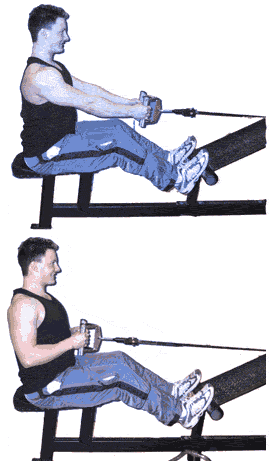
- Sit on the bench and place your feet on the footplate with your knees slightly bent.
- Lean forward and grab the V-bar, then sit back up tall. Keep your back stretched and straight, with your chest up. This is your starting position.
The pull and the return
- Squeeze your shoulder blades together and pull the bar towards your abs. Keep your back straight the whole time you row.
- Hold your torso vertically straight as you pull, and breathe out slightly as the handle comes in.
- As you go back to the starting position, breathe in and let your upper body tip forward by about 10 degrees. This small lean stretches your back muscles fully. Keep it controlled rather than letting the stack drag you forward.
- Sit tall again and repeat for all your reps.
Try to think of your hands as hooks. The pull should start with your shoulder blades moving back, with your elbows following. If your hands lead while your shoulders stay still, your biceps end up doing most of the work.
How can you check your rowing form?
Filming a set on your phone from the side is the quickest check. Play it back and compare your pace and posture with the steps above. Look for a back that rounds forward at the start of each rep, or a torso that rocks back and forth to move the weight. Either one means the stack is too heavy.
Which muscles do cable rows work?
The seated cable row works your lower back muscles, biceps, lats, traps, teres major and rhomboids. Each one has a slightly different job in the pull.
- Lats (latissimus dorsi) are the large, fan-shaped muscles down the sides of your back. They pull your upper arms down and back, and they give your back its width.
- Rhomboids and traps sit between and above your shoulder blades. They squeeze the blades together and add thickness to your upper back, which also helps your posture.
- Teres major is a smaller muscle near the armpit that works alongside the lats.
- Lower back muscles run along your spine and hold your torso upright while you pull.
- Biceps bend your elbows and assist on every rep.
Our muscle map shows where each of these muscles sits in your body, so you can picture the right ones working as you row.
What are the most common rowing mistakes?
Most problems with cable rows come from using a weight that is too heavy. Watch out for these habits.
- Swinging the torso. Rocking back and forth turns the row into a body-momentum exercise. Your lower back takes the strain and your lats do less.
- Rounding the back. Letting your spine curl forward at the stretch puts extra stress on it. Keep the forward lean small and your chest up.
- Shrugging. If your shoulders creep up towards your ears, your upper traps take over. Keep your shoulders down and relaxed.
- Cutting the range short. Stopping halfway means your back never fully contracts or stretches. Bring the handle to your stomach on every rep.
- Rushing the return. Letting the stack crash down wastes half of each rep. Take two or three seconds to let the weight back out.
Sets, reps and building rows into your routine
Aim for 3–4 sets of 10–12 reps. Choose a weight you can control for every rep, with the last two feeling hard but still clean. Once you can complete all your sets at 12 reps with good form, add a small amount of weight at your next session.
Rows pair well with a vertical pull such as lat pulldowns or pull-ups. The vertical pull builds width, while the row adds thickness through the middle of the back. A simple back session could start with pull-ups or pulldowns, move on to seated cable rows and finish with back hyperextensions for the lower back.
Rest for about one to two minutes between sets so your form stays sharp. Training your back once or twice a week, with at least a day of rest in between, gives the muscles time to recover and grow.
Variations to try
Once the basic movement feels natural, you can change the handle. A wide straight bar shifts more work to the upper back and rear shoulders. A single handle lets you row one arm at a time, which helps if one side is weaker. With a rope, your hands can move apart at the end of the pull for a stronger squeeze.
Whatever handle you pick, sit tall and let your back do the pulling. Lower the weight out as carefully as you pull it in, and add load in small steps from week to week.
More in Back Exercises
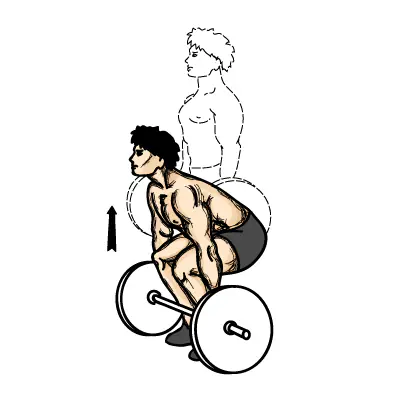
Deadlift
The deadlift is one of the best compound exercises you can do. In a single movement you lift a loaded barbell from the floor to standing, using your legs, hips, back and…
Read more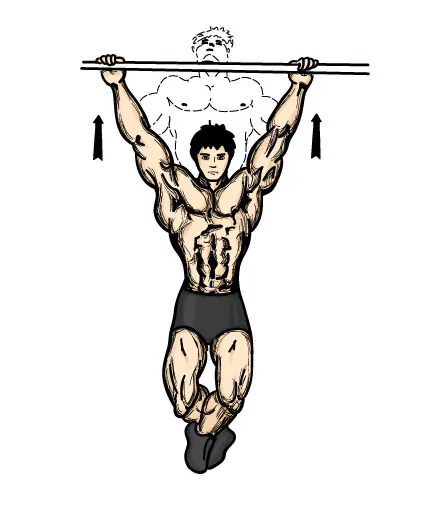
Pull Ups for Back
Pull-ups are among the oldest strength exercises there are, and they are still widely seen as the king of back exercises. You hang from a bar and pull your own bodyweight up…
Read more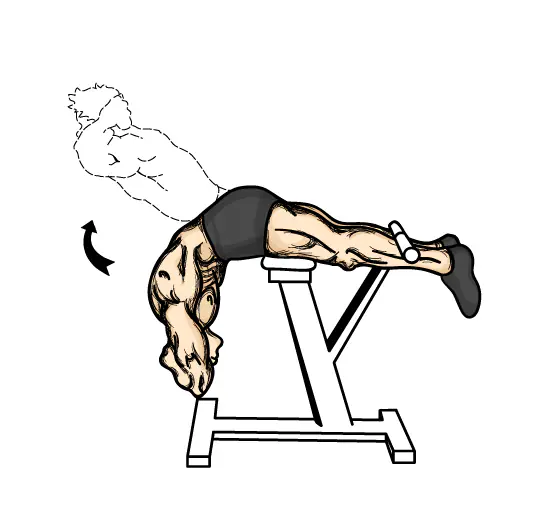
Back Hyperextension
The back hyperextension is a lower back exercise performed on a hyperextension bench, sometimes called a Roman chair. You lock your legs against the pads, lower your upper body towards the floor…
Read moreComments (5)
Show / hide
Comments are closed. These comments were preserved from the original site.
#1 Adriana
thanks for share!
#2 Yvone Maria
nice post
#3 Social
gr8
#4 ÿþd
If you’re serious about getting it.
#5 Anmol
gr8 for back muscles.