
Dumbbell Bench Press
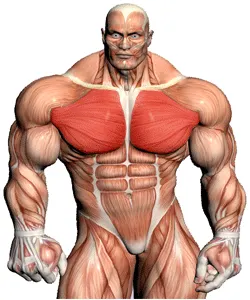
The dumbbell bench press, often just called the dumbbell press, is a basic chest exercise for gaining muscle and shape. You lie on a flat bench and press a pair of dumbbells up from your chest. It works the pectorals, deltoids and triceps, and it develops the chest muscles as a whole rather than one area.
We rate the dumbbell press 9.2 out of 10, or "excellent", and many trainers count it among the best chest exercises for beginners and experienced lifters alike. This guide explains why dumbbells are worth using, how to get heavy ones into position safely, the correct form, and how to choose your weight.
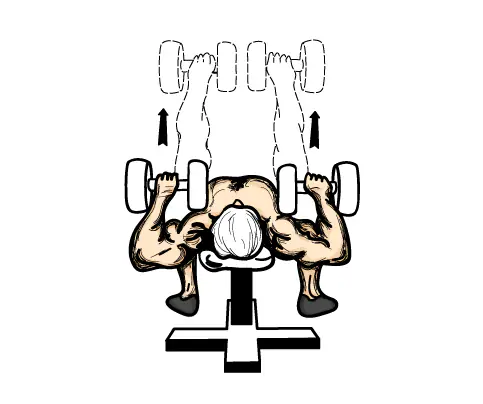
Why choose dumbbells over a barbell?
A barbell locks both hands together, so a stronger arm can quietly do more than its share. With dumbbells, each side has to lift its own weight. Any imbalance shows up straight away, and over time the weaker side catches up.
Dumbbells also give you a longer range of movement. Your hands can travel slightly lower at the bottom and closer together at the top, which gives the chest muscles a fuller stretch and squeeze. Because the dumbbells can move freely, your shoulders find their own comfortable path. Many people with niggly shoulders find this version easier on the joints than the flat barbell bench press.
The trade-off is balance. Steadying two separate weights is harder, so expect to lift less in total than you would on a barbell. That extra work for the small stabilising muscles around the shoulder is one of the benefits.
Getting heavy dumbbells into position
The trickiest part of this exercise is often getting set up. If you are lifting heavy weights, lie down on the bench first and ask a training helper to hand you the dumbbells. This is much safer than trying to swing them into place yourself.
If you train alone, use the knee kick method:
- Sit on the end of the bench with a dumbbell standing on each thigh, close to your knees.
- Lie back and, as you do, use your knees to help push the dumbbells up to your chest.
- Press them straight up to the starting position.
At the end of a set, reverse the process. Lower the dumbbells to your chest, bring your knees up to meet them and roll back up to sitting. Avoid dropping heavy dumbbells out to the sides from the top position, as this can wrench your shoulders and is unsafe for people nearby.
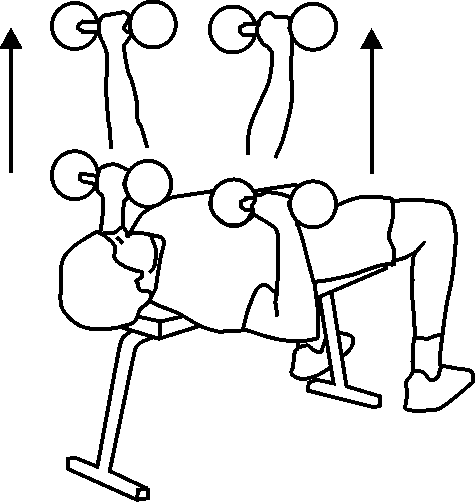
Dumbbell bench press correct form
Lifting heavy dumbbells matters far less than doing the exercise correctly. Learn the movement with a light pair first, then add weight once every rep looks the same.
- Take a pair of dumbbells of a comfortable weight and lie down on a flat bench, feet flat on the floor.
- Start with the dumbbells held above your chest, arms straight.
- Breathe in and lower the dumbbells slowly until they just touch the sides of your chest.
- Breathe out and press the dumbbells back up to the top, locking them at the starting position.
- You should feel pressure on your chest at this position.
- Keep your hands and wrists in a neutral, steady position throughout every up and down movement.
Let your elbows travel at roughly 45 degrees to your body rather than straight out to the sides. Keep your shoulder blades squeezed together against the bench. The video below shows a smooth, controlled set.
Which grip should you use?
Palms facing forward
This is the standard grip and mirrors a barbell press. It places the most work on the chest. Keep the dumbbells in line with each other so they form one long bar shape.
Palms facing each other
Often called a neutral or hammer grip, this keeps your elbows closer to your body. It shifts a little more work to the triceps, a bit like the close-grip bench press, and is usually the most comfortable grip for sore shoulders.
Angled grip
Many lifters turn the dumbbells about halfway between the two. This is a natural middle ground and suits most people well. Try all three and use whichever lets you press smoothly without pain.
Mistakes that waste your effort
Most problems with the dumbbell press come from rushing or from picking weights that are too heavy. Watch out for these:
- Clanging the dumbbells together at the top. It feels satisfying but takes tension off the chest. Stop with the dumbbells a few centimetres apart.
- Cutting the depth short. Lowering only halfway loses the stretch that makes dumbbells so useful. Bring them down until they touch the sides of your chest.
- Letting the wrists bend back. Bent wrists are weaker and can ache. Keep your knuckles pointing up and the weight over your forearms.
- Lifting your hips off the bench. Bridging up turns the lift into a decline press and strains your lower back. Keep your bottom down and your feet planted.
- Uneven pressing. If one dumbbell rises faster, slow down and let the weaker arm set the pace.
How heavy should your dumbbells be?
Choose a weight you can press for 8 to 12 controlled reps, where the last two reps are hard but your form stays the same. If the dumbbells wobble badly or your elbows drop out of line, go lighter.
A sensible beginner plan is 3 sets of 10 reps with about 90 seconds of rest between sets. When you can complete all 3 sets with clean form, move up to the next pair of dumbbells. Gyms usually go up in steps of 1 to 2.5 kg (2 to 5 lb) per dumbbell, which keeps progress gradual.
Building it into your chest routine
The dumbbell press can be your main chest exercise, or it can follow a barbell lift. Raising the bench turns it into an incline dumbbell press, which shifts the focus to the upper chest in the same way as the incline bench press. A simple session might be dumbbell press, incline press and then dumbbell flyes, with 3 sets of each.
For a clear view of which muscles you are training, the diagram below shows the areas the dumbbell bench press works. Check our muscle map to see where the pectorals, deltoids and triceps sit in the body.
More in Chest Exercises
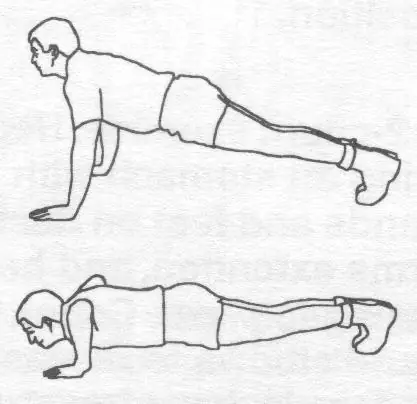
Push Ups for Chest
Push-ups are the most basic exercise for the chest, and they also make a good warm-up for the whole body. You can do them anywhere, and you need no equipment at all.…
Read more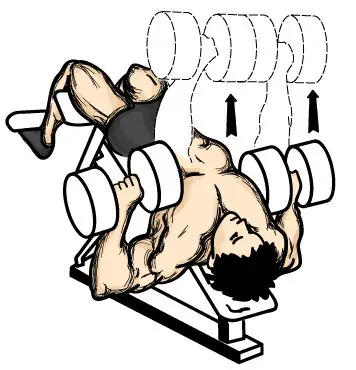
Decline Bench Press
The decline bench press is a pressing exercise done on a bench tilted so that your head sits lower than your hips. It is similar to the flat bench press and works…
Read more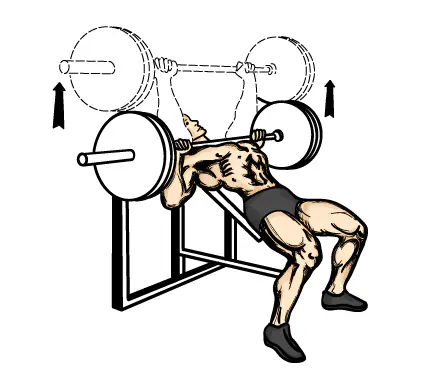
Incline Bench Press
The incline bench press is a chest exercise done on a bench set at an upward angle, so your head is higher than your hips. It is similar to the flat bench…
Read moreComments (8)
Show / hide
Comments are closed. These comments were preserved from the original site.
#1 shawan
very nice exercise for chest
#2 Tanu
I wanna develpo my chest too
#3 Taylored
Is this exercise really helpful ??
#4 Erma
how to develop my big ones
#5 Hajar
chest te phatte
#6 Nicole
100lbs man, can i do it as well?
#7 John
Is this helpful ??
#8 cutb
very very good