
Flat Barbell Bench Press
The flat barbell bench press, or simply the bench press, is one of the most common and effective exercises for building the chest. It sits at the core of almost every bodybuilding workout. You lie on a flat bench and press a straight bar, loaded with round weight plates at each end, up from your chest.
It is also one of the most often botched lifts in the gym. Many people perform it the wrong way, so their chest muscles do not develop properly even though they lift heavy weights. This page sets out the bench press muscles worked, how to set up, the correct form step by step, and a simple plan for sets and reps.
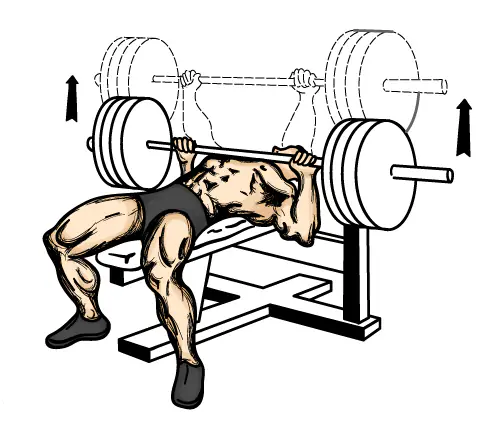
Bench press muscles worked
The main muscle is the pectoralis major, the large muscle that covers the front of your chest. On a flat bench, the middle of the chest does the most work, with the upper and lower sections helping. This makes the flat bench the best all-round chest builder, while the incline bench press and decline bench press shift the focus up or down.
The front deltoids (the front of the shoulders) assist throughout. The triceps straighten your elbows and take on more of the load as the bar rises. Your upper back, lats and even your legs work to keep you stable on the bench.
Pressing more weight with poor technique can injure you. Correct technique matters for chest growth as well as strength, so take the time to get each part right.
Setting up before you lift the bar
A good bench press starts before the bar leaves the rack. Take a moment over each of these points on every set.
Eyes, grip and wrists
Lie down so your eyes are directly under the bar. Grip it slightly wider than shoulder width, so your forearms are roughly vertical when the bar touches your chest. Wrap your thumbs around the bar and let it sit low in your palm, over your wrist, rather than up near your fingers.
Back, shoulders and feet
Squeeze your shoulder blades together and pull them down towards your hips, as if tucking them into your back pockets. This gives you a solid base and protects the shoulder joints. Keep a small natural arch in your lower back, with your bottom on the bench. Plant your feet flat on the floor, a little wider than your hips, and press them down to brace your whole body.
Bench press correct form, step by step
- Lift the bar out of the rack and hold it with straight arms above your shoulders.
- Breathe in and lower the bar to the middle of your chest. Your movement should be slow and controlled.
- Keeping your elbows tucked in, breathe out and push the barbell up to the starting position.
- On the next rep, bring the bar down again towards your mid to lower chest.
- Repeat all the steps for your chosen number of reps.
The bar does not travel in a perfectly straight line. It touches low on the chest and finishes above your shoulders, moving in a slight curve. Watch the video below to see this in action.
Which cues make your bench press stronger?
Small changes in how you think about the lift can add strength and make it safer. Most of these cues also carry over to the close-grip bench press, which uses the same bar and bench.
- Elbows at 45 degrees. Keep your elbows tucked in at about a 45 degree angle to your body. This gives you more strength at the bottom of the push and avoids undue pressure on your shoulders.
- Chest first, then triceps. At the start of each push, your chest muscles do most of the work. As the bar moves up, your triceps come into play more and more to finish the lift.
- Push yourself away from the bar. Try to push as if you are driving yourself away from the bar, not the bar away from you. This keeps your back tight and your shoulders pinned to the bench.
- Stay tight at the bottom. Touch your chest lightly. Do not bounce the bar or let your body relax between reps.
Can you bench press safely on your own?
The safest option is always to have a spotter standing behind the bench. They can help you rack the bar if you cannot finish a rep. Agree beforehand how much help you want and when they should step in.
If you train alone, use a power rack or a bench with safety arms set just below your chest height. If a rep fails, you can lower the bar onto the safety arms and slide out from underneath. Without safety arms, stop each set one or two reps short of failure so you always have enough strength left to rack the bar.
Warm up before your working sets as well. Start with the empty bar for 10 to 15 reps, then do one or two lighter sets as you build up to your target weight. This prepares your shoulders and elbows and lets you check your technique. If you ever feel a sharp pain in the shoulder or chest, stop the set rather than pushing through.
Sets, reps and steady progress
For building muscle, do 3 to 4 sets of 10 to 12 reps, resting about 90 seconds to two minutes between sets. Start with a weight you can lift for every rep with clean form. Many beginners start with just the empty bar, which usually weighs 20 kg (44 lb) on a standard Olympic barbell.
When you can complete all your sets and reps, add a small amount the next session, such as 2.5 kg (5.5 lb) in total. If your form breaks down, drop back and build up again. Once you follow these techniques consistently, you should see a clear improvement in your chest size and strength.
Follow the bench press with one or two exercises that hit the chest from other angles. The dumbbell bench press or dumbbell flyes are both good choices, and you can find more in our chest exercises section.
More in Chest Exercises
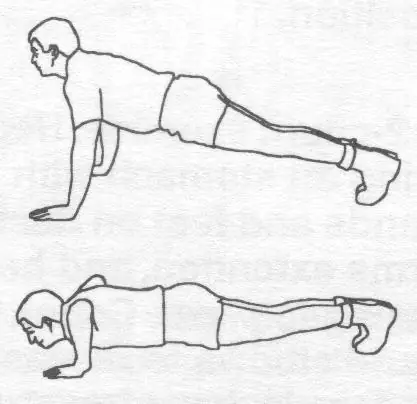
Push Ups for Chest
Push-ups are the most basic exercise for the chest, and they also make a good warm-up for the whole body. You can do them anywhere, and you need no equipment at all.…
Read more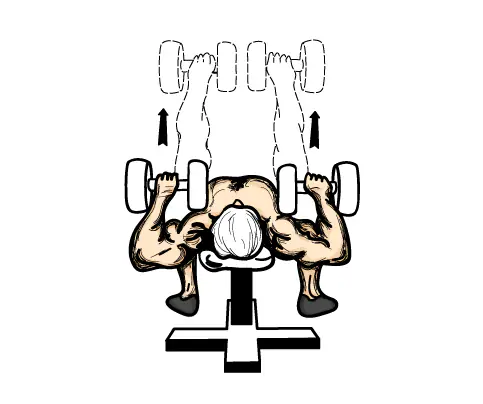
Dumbbell Bench Press
The dumbbell bench press, often just called the dumbbell press, is a basic chest exercise for gaining muscle and shape. You lie on a flat bench and press a pair of dumbbells…
Read more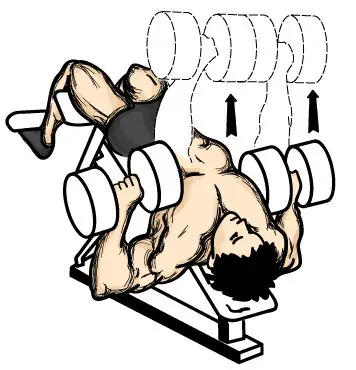
Decline Bench Press
The decline bench press is a pressing exercise done on a bench tilted so that your head sits lower than your hips. It is similar to the flat bench press and works…
Read moreComments (6)
Show / hide
Comments are closed. These comments were preserved from the original site.
#1 Marti
I have always eaten junk food ever since I was itltle.i wanna make muscles now.
#2 Thie
supplements will help?
#3 Slobodan
gr8 for pecs
#4 Bianca
The power of chest is bench press
#5 Natalymaribel
the king of chest exercises
#6 RAhul
i also wanna develop my chest.