
Push Ups for Chest
Push-ups are the most basic exercise for the chest, and they also make a good warm-up for the whole body. You can do them anywhere, and you need no equipment at all. Done well, push-ups for chest training build both muscle mass and shape. They work the entire chest area, with the triceps and shoulders helping as secondary muscles.
We rate the push-up 9.4 out of 10, which puts it among the highest-rated chest exercises on our site. This page explains which muscles push-ups work, how to do a perfect push-up, the faults to avoid, and how to make the exercise easier or harder as you get stronger.
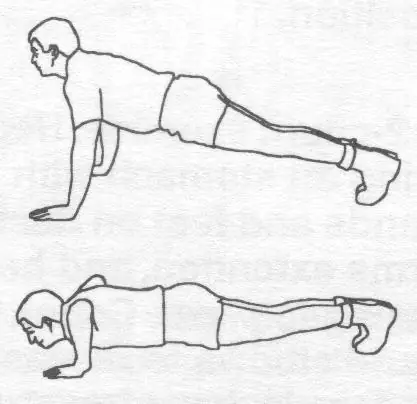
Which muscles do push-ups work?
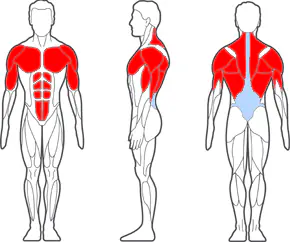
The main muscle is the pectoralis major, which covers the front of your chest. Because your hands push against the floor and your arms move towards each other in an arc, the whole chest works rather than one section of it.
Your triceps straighten your elbows at the top of each rep, and your front shoulders help to drive you up. Unlike a bench press, a push-up also asks your core to hold your body straight like a plank. Your abdominal muscles, glutes and the small muscles around your shoulder blades all work to keep you in line.
Check our muscle map to see where each of these muscles sits in the body. The image below shows the push-up muscles worked.
How to do a perfect push-up
Correct form matters. Without it, you will not be able to pump up your chest muscles properly, and you may strain your wrists or lower back. Concentrate on doing each rep the right way before you worry about how many you can do.
Getting into position
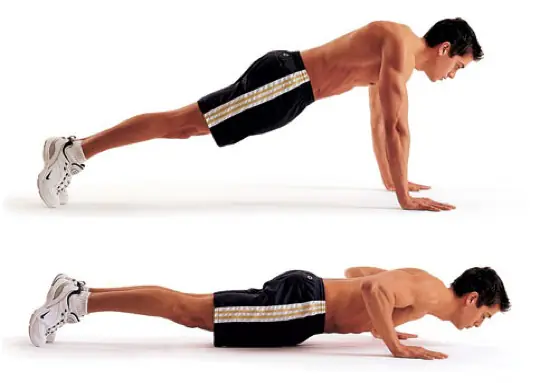
- Lie face down on the floor.
- Place your hands palms down on each side of your body, slightly wider than your shoulders.
- Push up so your whole body weight rests on your hands and toes only.
- Keep your whole body aligned, from your head through your hips to your heels. Your upper arms support your body as you push up.
Performing each rep
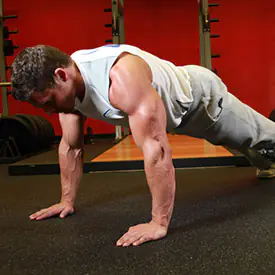
- At the top, you should feel the pressure on your chest. This is the starting position for a perfect push-up.
- Breathe in as you slowly bend your arms and lower yourself until your chest is about 2.5 cm (1 in) from the floor. Your chest should not touch the floor.
- Hold this position for a second.
- Breathe out and push back up to the starting position.
- Repeat for the number of repetitions you need.
The video below shows the movement from start to finish. Watch how the body moves as one piece, with no sagging in the middle.
Faults that make push-ups less effective
- Sagging hips. If your lower back drops, the strain moves to your spine. Squeeze your glutes and brace your stomach as if someone were about to poke it.
- Hips in the air. Piking up shortens the movement and takes work away from the chest. Keep a straight line.
- Elbows flared wide. Elbows at 90 degrees to your body stress the shoulders. Let them angle back at about 45 degrees, so your body and arms form an arrow shape from above.
- Half reps. Stopping a few inches down feels easier but builds less muscle. Lower until your chest is close to the floor every time.
- Dropping the head. Look at the floor slightly ahead of your hands, keeping your neck in line with your spine.
Making push-ups easier or harder
A big advantage of push-ups is how easily you can adjust them. You can start at almost any fitness level and keep progressing for years.
Easier versions for beginners
Wall push-ups are done standing, with your hands against a wall. They teach the movement with very little load. Incline push-ups, with your hands on a sturdy bench or kitchen worktop, are the next step. The higher your hands, the easier the exercise. Knee push-ups reduce the weight you lift while keeping the same arm movement on the floor.
Harder versions as you get stronger
Decline push-ups place your feet on a bench or step. This shifts more weight onto your arms and works the upper chest, much like the incline bench press. Diamond push-ups, with your hands close together under your chest, put far more load on the triceps. You can also slow the lowering phase to three or four seconds, or add a longer pause at the bottom.
Can push-ups build a bigger chest on their own?
For beginners, yes. If you have never trained before, regular push-ups will add noticeable size and firmness to your chest within a few months. Muscles grow when they are pushed close to their limit, and for a new lifter your own body weight is plenty.
The limit comes later. Once you can do dozens of reps in a row, push-ups turn into an endurance exercise. At that point, harder variations or a weighted vest can keep you progressing. Many people eventually add gym lifts such as the dumbbell bench press, which let you add weight in small steps. Push-ups still earn their place alongside them, because they train your core and shoulder blades in a way that lying on a bench cannot.
How many push-ups should you do?
If you are new to them, try 3 sets of as many good-form reps as you can manage, resting about a minute between sets. Stop each set when your form starts to slip, not when you collapse. Write down your numbers and aim to add a rep or two each week.
Once you can do 3 sets of 15 to 20 clean reps, move to a harder version rather than simply doing more. That keeps the challenge high enough for your chest muscles to grow.
You can use push-ups as a warm-up for chest day. They also work well as a power exercise at the end of your workout to pump up your chest muscles. After heavy pressing such as the flat barbell bench press, a couple of sets to failure is a simple finisher. On days away from the gym, push-ups are an easy way to keep your chest working at home. See our chest exercises section for more ideas to add alongside them.
More in Chest Exercises
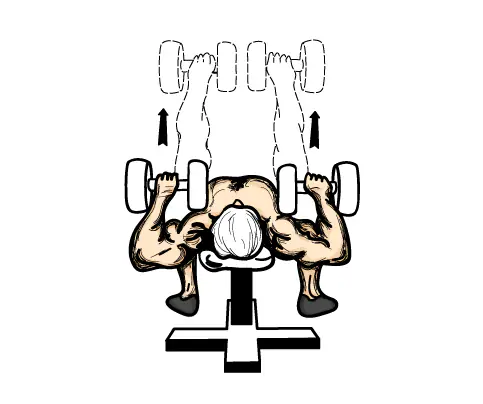
Dumbbell Bench Press
The dumbbell bench press, often just called the dumbbell press, is a basic chest exercise for gaining muscle and shape. You lie on a flat bench and press a pair of dumbbells…
Read more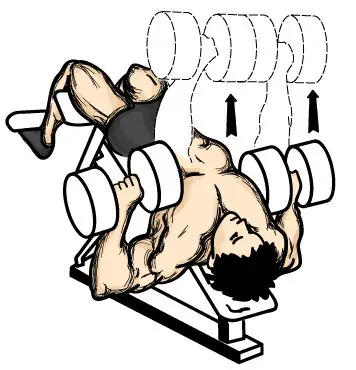
Decline Bench Press
The decline bench press is a pressing exercise done on a bench tilted so that your head sits lower than your hips. It is similar to the flat bench press and works…
Read more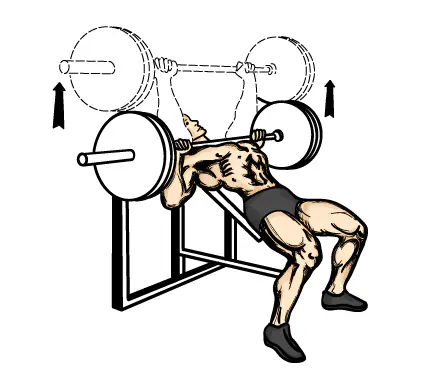
Incline Bench Press
The incline bench press is a chest exercise done on a bench set at an upward angle, so your head is higher than your hips. It is similar to the flat bench…
Read moreComments (2)
Show / hide
Comments are closed. These comments were preserved from the original site.
#1 Adriana
thanks for share!
#2 Jemes hand
that is a fantastic story! congratulations