
Decline Bench Press
The decline bench press is a pressing exercise done on a bench tilted so that your head sits lower than your hips. It is similar to the flat bench press and works the same muscle group: the pectorals, deltoids and triceps. The difference is that the angle puts more pressure on the lower chest, which makes it one of the most effective lower chest exercises you can do.
You can perform the decline press with a barbell or with dumbbells. We rate it 9 out of 10, which puts it in our "excellent" bracket. This guide covers how to set up safely, the correct form, the mistakes that cost people results, and how to fit it into your chest training.
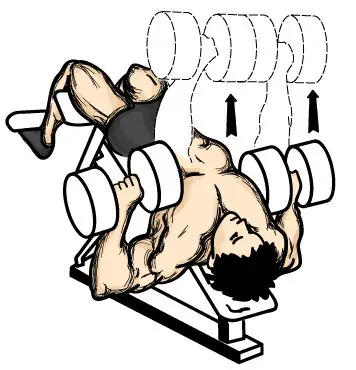
What does the decline bench press work?
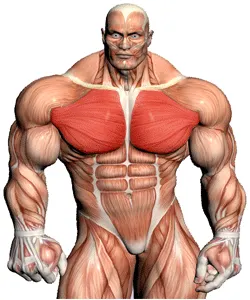
The main target is the pectoralis major, the large fan-shaped muscle across the front of your chest. The decline angle lines your arms up with the lower fibres of that muscle, so they do a bigger share of the work than on a flat bench. That makes the decline press a favourite with lifters who want a fuller, more rounded lower chest.
Your front deltoids (the front of your shoulders) and your triceps help to push the weight. Because of the angle, the shoulders tend to do slightly less work than on a flat or incline press. Many lifters find the decline press kinder to their shoulders for that reason, and they can often handle a little more weight on it.
To see exactly where these muscles sit, have a look at our muscle map. The diagram below shows the areas the decline press works hardest.
Setting up on a decline bench
Many problems with this exercise start as you get on or off the bench. Getting into position with your head lower than your hips feels odd at first, so take your time.
- Set the bench to a gentle decline. Around 15 to 30 degrees is plenty; a steeper angle adds little and makes the lift harder to control.
- Sit on the bench and hook your feet or ankles firmly under the leg pads before you lie back. They stop you sliding down the bench.
- Lie back so your eyes are roughly under the bar, then grip it a little wider than shoulder width.
- Squeeze your shoulder blades together and down. Keep this position for the whole set.
Have a training partner or helper spot you, just in case you need help with balance or lifting part-way through a set. This matters even more on a decline than on a flat bench. If you get stuck, it is very hard to roll the bar off safely when you are tilted head-down and your feet are locked in.
Decline barbell bench press: correct form
Lifting heavy weights with poor form gets you nowhere. Concentrate on the correct form of every exercise first, because that is what leads to gains in muscle mass and shape. Add weight only once each rep looks the same as the last.
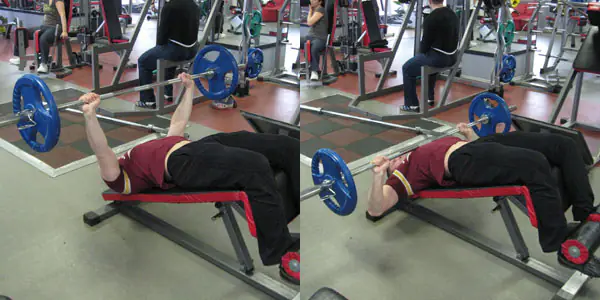
- Lift the bar out of the rack with your spotter's help and hold it over your lower chest with straight arms.
- Breathe in and lower the bar slowly until it touches your lower chest or upper abs.
- Keep your elbows tucked in as you lower the bar. Do not let your upper arms go straight out to the sides, as this puts excess strain on the shoulder joints.
- Moving only your arms, breathe out and push the bar back up to the starting position until your arms are locked.
- You should feel the pressure on your lower chest at this point. Pause briefly, then start the next rep.
Aim for about two seconds on the way down and a firm, steady push on the way up. The bar should travel in a short, slight arc from your lower chest to a point above your shoulders. Watch the video below before your first attempt, as it shows the movement clearly.
Which mistakes hold back your lower chest?
Bouncing the bar
Dropping the bar fast and bouncing it off your ribs lets momentum do the work. It also risks bruising your sternum. Control the descent and touch the chest lightly.
Flaring the elbows
When the elbows drift out to 90 degrees, the load moves from the chest to the front of the shoulder joint. Keep them tucked at a comfortable angle to your body, roughly 45 to 60 degrees.
Lowering the bar too high
On a decline, the bar should land low on the chest. Bringing it towards your neck or upper chest, as you would on the incline bench press, throws off the bar path and makes the lift feel unstable.
Loose feet and a flat back
If your feet are not secure under the pads, you will slide and lose tension. Keep a small natural arch in your lower back and your shoulder blades pinned throughout.
Barbell or dumbbells for the decline press?
Both versions train the lower chest well. The right choice depends on your experience and what you have to hand.
Decline barbell bench press
The barbell lets you lift the most weight and makes it easy to track your progress from week to week. It is the better choice for building strength. Its drawback is that your hands are fixed, so a stronger side can quietly take over.
Decline dumbbell press
Dumbbells let each arm work on its own and allow a slightly deeper stretch at the bottom. They are also safer to bail out of, because you can lower them to your sides if a rep fails. The tricky part is getting them into position; ask your spotter to hand them to you once you are locked in. Our dumbbell bench press guide covers handling dumbbells in more detail.
How many sets and reps should you do?
If you are new to the decline press, start with 3 sets of 8 to 12 reps using a weight you can control for every rep. Rest about 90 seconds between sets. Once you can complete all your reps with good form, add a small amount of weight the following session.
The decline press works best as the second or third exercise in a chest workout. A balanced session might start with the flat barbell bench press, move on to incline pressing for the upper chest, then the decline press for the lower chest. You could finish with dumbbell flyes or a few sets of push-ups to pump the muscles.
Train your chest once or twice a week and leave at least two days between hard sessions. If you feel sharp pain in your shoulder or elbow, stop the set and check your form before you carry on. For more ideas, browse our full range of chest exercises.
More in Chest Exercises
Push Ups for Chest
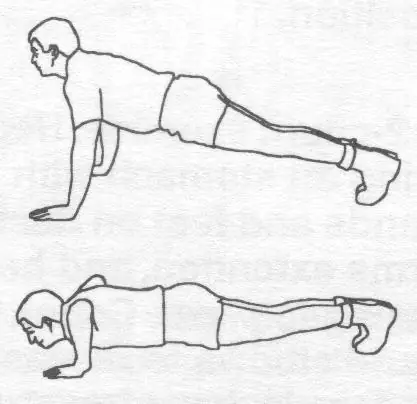
Push-ups are the most basic exercise for the chest, and they also make a good warm-up for the whole body. You can do them anywhere, and you need no equipment at all.…
Read more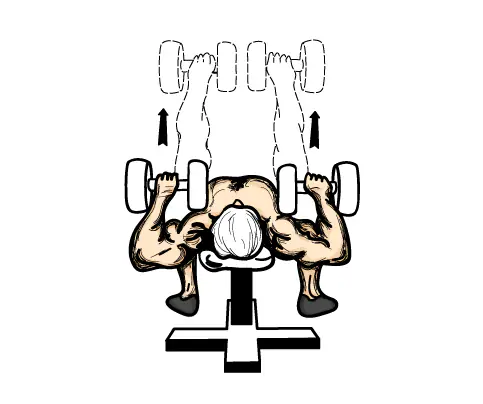
Dumbbell Bench Press
The dumbbell bench press, often just called the dumbbell press, is a basic chest exercise for gaining muscle and shape. You lie on a flat bench and press a pair of dumbbells…
Read more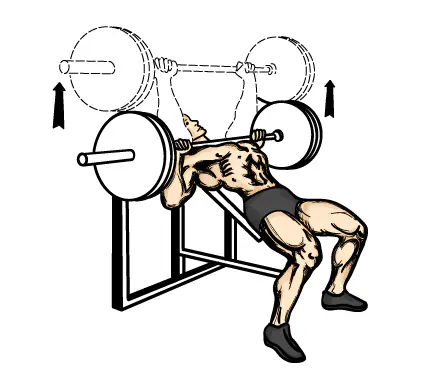
Incline Bench Press
The incline bench press is a chest exercise done on a bench set at an upward angle, so your head is higher than your hips. It is similar to the flat bench…
Read moreComments (19)
Show / hide
Comments are closed. These comments were preserved from the original site.
#1 Fred Dumesnil
A pity, but I debate with this unique post. I actually do like your particular internet page however and will likely continue to keep coming once again for posts.
#2 Adriana
thanks for share!
#3 Gretchen
This is for lower chest right??
#4 Shaquana Hutchen
Very nice
#5 hurry
chest is easy to build?
#6 Nimrat Sandhu
i love you Yuvraj
#7 Nimrat Sandhu
my friend, i am now a big fan of yours and your blog’s follower, thanks for the help
#8 Andrew Pelt
very nice post, thanks
#9 seria
very nice post, thanks
#10 Suppliers
thank you ever so for you blog article.Much thanks again. Really Cool.
#11 Ramon Brewer
my pleasure to read ur article.
#12 Hotel Papaho
very good for chest
#13 note
Major thanks for the blog article.Really thank you! Keep writing.
#14 cialis
Excellent idea
#15 Santos Blaize
I will save your weblog and come back often.
#16 lapto
A round of applause for your article post.Much thanks again. Really Great.
#17 xenical
I can suggest to visit to you a site,
#18 acquisto
Do not puzzle over it!
#19 venda
I hope, you will come to the correct decision.