
Dumbbell Fly
The dumbbell fly is a basic chest exercise that can increase your chest muscle mass. You lie on a bench and open your arms out wide in a hugging arc, then bring the dumbbells back together over your chest. It is great for beginners in bodybuilding. As well as developing your pecs, it helps your chest look broader and wider.
We rate the dumbbell fly 9.2 out of 10, or "excellent". There is one big condition attached, though. The weight must stay light enough for you to control. This page explains how the fly differs from pressing, the dumbbell fly correct form, why some lifters get hurt doing it, and how to fit it into your training.
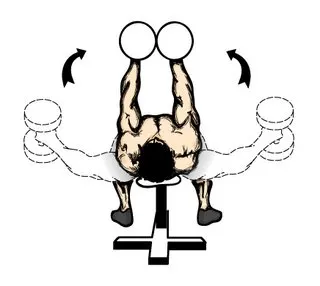
How is a fly different from a press?
In a press, such as the dumbbell bench press, your elbows bend and straighten. Your chest, shoulders and triceps all share the work. That makes pressing a compound exercise, and it lets you lift heavier weights.
In a fly, your elbows stay at the same slight bend for the whole rep. The movement happens only at the shoulder, as your arms sweep out and back in. This takes the triceps almost out of the picture and makes the chest do nearly all the work. Exercises like this are called isolation exercises.
The fly also puts the chest under a long stretch at the bottom. That stretch is a big part of why it builds the chest so well. It is also why heavy weights are risky, which we cover further down.
What muscles does the dumbbell fly work?
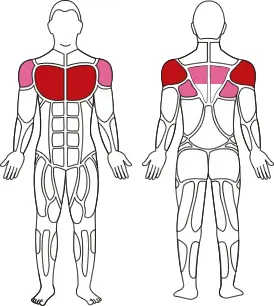
The main target is the pectoralis major, the large muscle across the front of your chest. The fly is especially good for the lower chest muscles, an area that is often ignored even though a superb chest depends on it. One of the pectoral muscle's main jobs is drawing your arms across your body, and that is exactly the movement the fly trains. The front of the shoulders and the biceps help to hold the arm position steady.
The wide arc is also why flyes help the chest look broader. Working the pecs through a full stretch develops the outer edges of the muscle, near the armpits, as well as the middle. Over time this gives a wider, more filled-out shape across the front of your upper body.
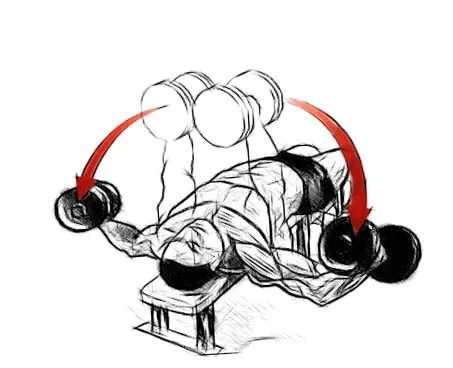
Doing the fly on a decline bench, as in the picture below, puts even more of the focus on that lower section of the chest.
See our muscle map for a full guide to where each of these muscles sits in the body.
Dumbbell fly correct form
- Lie down straight on a flat bench, with your feet flat on the floor.
- Keep your back and head flat against the bench at all times.
- Grab two dumbbells and hold them above your chest, palms facing each other. Bend your arms slightly so they form an A-shape.
- Breathe in and lower the dumbbells out to the sides in a wide arc, keeping your arms in the same bent position.
- Stop when your upper arms are about level with your body, or when you feel a strong stretch across your chest.
- Breathe out and raise the dumbbells back to the starting A-position, squeezing your pectoral muscles as they come together.
Getting the elbow angle right
Think of hugging a large tree. Your elbows should stay softly bent, at roughly the same angle from start to finish. If you straighten your arms, the strain moves onto the elbow joints and the front of the shoulder. If you bend them too much, the fly turns into a version of the dumbbell press and your chest loses the stretch.
The video below shows a controlled set with a steady elbow position.
Why do some lifters get injured doing flyes?
The dumbbell fly is a very good exercise for chest, but many weightlifters have injured themselves doing it, including muscle tears. The reason is leverage. With your arms out wide, a dumbbell that feels light at the top becomes very heavy at the bottom of the arc. If you lower it too fast or too far, the chest and shoulder can be overstretched under load.
For that reason, the fly is not the place to chase heavy weights. If you want to lift very heavy, it is better to switch to cable flies rather than dumbbell flyes. Cables keep a steadier tension through the whole movement and do not pull your arms down as hard at the bottom. A pec deck machine is another safer option.
Simple ways to stay safe with dumbbells:
- Pick a weight you could lift for at least 12 slow reps.
- Take two to three seconds to lower the dumbbells.
- Never let your elbows drop below the level of the bench.
- Bring the dumbbells to your chest before sitting up at the end of a set.
Flat, incline or decline flyes?
Flat dumbbell fly
The standard version described above. It works the chest as a whole and is the best place to start learning the movement.
Incline dumbbell fly
Setting the bench to about 30 degrees moves the focus towards the upper chest. It pairs well with the incline bench press on days when you want to bring up the area near your collarbones.
Decline dumbbell fly
Tilting the bench head-down targets the lower chest even more. It is a natural partner for the decline bench press.
Where flyes fit in a chest workout
Because the dumbbell fly is an isolation exercise, it works best after your main pressing movements. Your chest is already warm, and you do not need heavy weights to feel it working. Try 3 sets of 12 to 15 reps at the end of your chest session, resting about a minute between sets.
A simple beginner session could be the flat bench press, then the incline press, then dumbbell flyes. Focus on the squeeze at the top and the slow stretch at the bottom of every rep, and keep a training log so you can add weight gradually. Browse our chest exercises for more ways to build a complete chest.
More in Chest Exercises
Push Ups for Chest
Push-ups are the most basic exercise for the chest, and they also make a good warm-up for the whole body. You can do them anywhere, and you need no equipment at all.…
Read more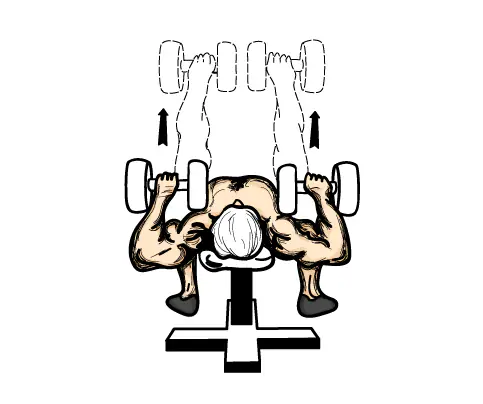
Dumbbell Bench Press
The dumbbell bench press, often just called the dumbbell press, is a basic chest exercise for gaining muscle and shape. You lie on a flat bench and press a pair of dumbbells…
Read more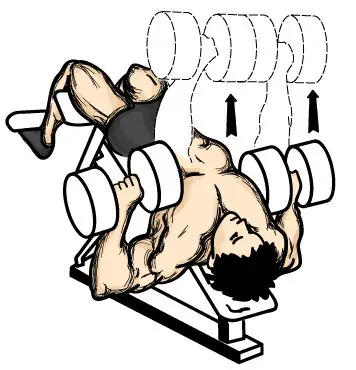
Decline Bench Press
The decline bench press is a pressing exercise done on a bench tilted so that your head sits lower than your hips. It is similar to the flat bench press and works…
Read moreComments (5)
Show / hide
Comments are closed. These comments were preserved from the original site.
#1 Javier
I have also heard that pecs can be hurt by this exercise/
#2 Jonas
Injury in chest ??? really
#3 Angela
can it really injure the chest?
#4 Nidhi
I love you writer
#5 Tano
hanks for that awesome posting. It saved MUCH time