
Incline Bench Press
The incline bench press is a chest exercise done on a bench set at an upward angle, so your head is higher than your hips. It is similar to the flat bench press and works the same muscle group, the pectorals, deltoids and triceps. The angle shifts more of the workload onto your upper chest, making it one of the best exercises for building a full, thick chest.
You can perform it with a barbell or with dumbbells. We rate the incline press 9 out of 10, or "excellent". Below you will find how to pick the right bench angle, the correct form, how to stay safe and where the lift belongs in your chest workout.
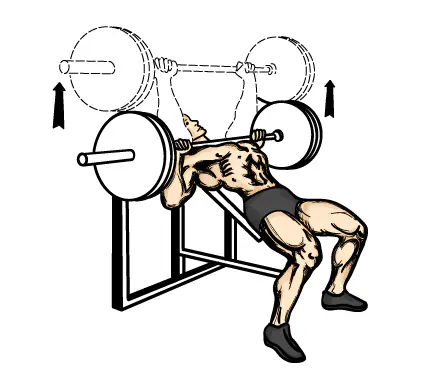
Why does the upper chest need its own exercise?
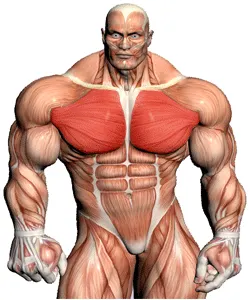
Your main chest muscle, the pectoralis major, has an upper section that attaches near your collarbone. Flat pressing trains it, but not as hard as the middle and lower parts. Many people who only flat bench end up with a chest that looks full at the bottom and flat near the collarbones.
Pressing at an upward angle brings your arms in line with those upper fibres. The front of your shoulders (the anterior deltoids) also works harder than on a flat bench, and your triceps help to finish each rep. Over time this gives the chest a squarer, more balanced look from the side and from the front.
For a clear picture of where each of these muscles sits, see our muscle map. The diagram below highlights the areas the incline press works hardest.
Choosing the right bench angle
The angle makes a big difference. Most lifters do well with the bench set between 30 and 45 degrees. On many adjustable benches that is the second or third notch up from flat.
Go much steeper than 45 degrees and the exercise starts to become a shoulder press, with your deltoids taking over from your chest. A lower angle of around 30 degrees keeps more of the load on the upper pecs and feels easier on the shoulder joint. If your shoulders tend to ache when pressing, start low and see how it feels.
Before you lie back, make sure the seat is set so your bottom stays put and you do not slide down the bench. Plant your feet flat on the floor, roughly hip width apart.
Incline barbell bench press: correct form
Lifting heavy weight is less important than performing the exercise the right way. Correct form is what leads to gains in muscle mass as well as shape, so learn it with a light bar first.
The lowering phase
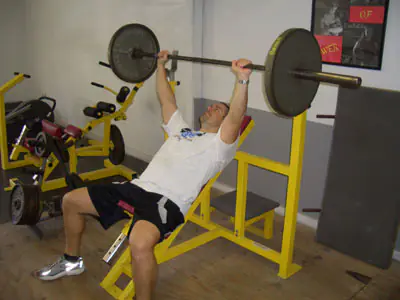
- Grip the bar slightly wider than shoulder width, pull your shoulder blades back and down, and lift the bar out of the rack.
- Hold it with straight arms above your upper chest.
- Breathe in and lower the bar slowly until it touches your upper chest, just below the collarbones.
- Keep your elbows tucked in as you lower the bar. Do not let your upper arms go straight out to the sides, as this places excess strain on the shoulder joints.
The pressing phase
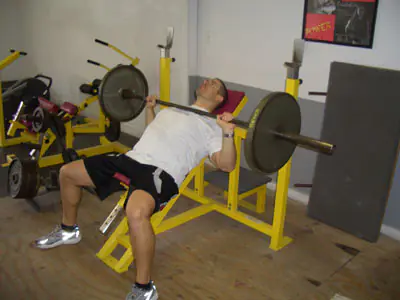
- Moving only your arms, breathe out and press the bar up to the starting position until it is locked out.
- You should feel the pressure on your chest at this position.
- Pause for a moment with the bar over your upper chest, then begin the next rep.
The bar should move in a fairly straight line, finishing above your chin or upper chest rather than over your face. Keep your wrists stacked over your elbows so the bar sits in the heel of your palm. The video below shows the full movement.
Staying safe under the bar
Even if you do not need help lifting the weight, you should still have a training partner spot you. They can step in if you get stuck part-way through a rep or need support to keep the movement balanced. On an incline, a failed rep can trap the bar across your upper chest and neck. A spotter matters just as much on the decline bench press, where getting out from under the bar is even harder.
A few other habits will keep your shoulders healthy:
- Warm up with one or two light sets before your working weight.
- Keep your shoulder blades pinned back so the front of the shoulder does not roll forward.
- Avoid arching your back so far that the lift turns into a flat press.
- Stop if you feel a sharp pain, rather than a muscle burn, in the front of the shoulder.
Which incline variations are worth trying?
Incline dumbbell press
Using dumbbells lets each arm move freely and allows a deeper stretch at the bottom. It also shows up any difference in strength between your left and right side. The technique is close to the flat version described in our dumbbell bench press guide, with the bench raised.
Low-incline press
Setting the bench at just 15 to 20 degrees gives a halfway house between flat and incline pressing. It is a good option if a steeper angle bothers your shoulders.
Incline flyes
Performing flyes on an incline bench isolates the upper chest without the triceps helping. Use light weights and follow the form in our dumbbell flyes article.
Where the incline press fits in your workout
If your upper chest is a weak point, do the incline press first in your session while you are fresh. Otherwise, it works well straight after the flat barbell bench press. Start with 3 sets of 8 to 12 reps, resting 90 seconds to two minutes between sets.
Expect to lift a little less than on the flat bench. This is normal, because the angle puts your muscles in a weaker position. A simple upper-chest session could start with the incline barbell press for 4 sets of 8. Follow it with the flat bench for 3 sets of 10, then incline flyes for 3 sets of 12. Finish with a set of push-ups to failure if you still have energy. Add weight slowly once every rep looks clean, and train chest once or twice a week with rest days in between. You will find more options in our chest exercises section.
More in Chest Exercises
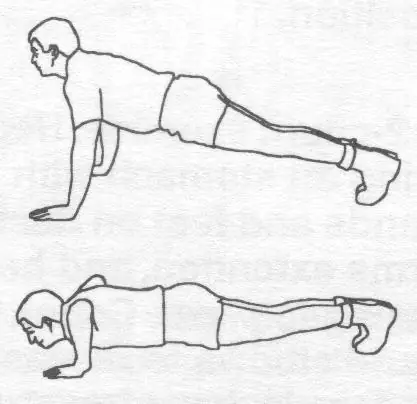
Push Ups for Chest
Push-ups are the most basic exercise for the chest, and they also make a good warm-up for the whole body. You can do them anywhere, and you need no equipment at all.…
Read more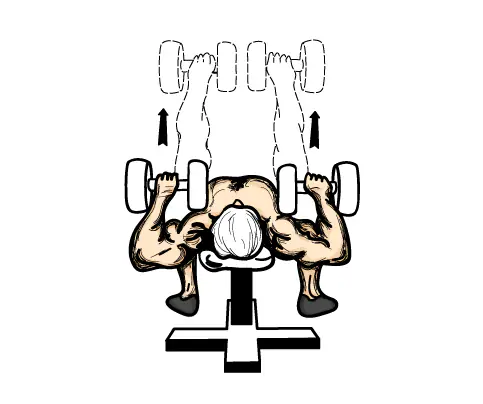
Dumbbell Bench Press
The dumbbell bench press, often just called the dumbbell press, is a basic chest exercise for gaining muscle and shape. You lie on a flat bench and press a pair of dumbbells…
Read more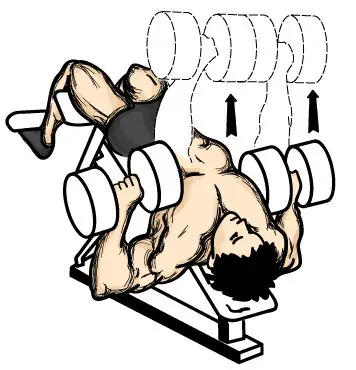
Decline Bench Press
The decline bench press is a pressing exercise done on a bench tilted so that your head sits lower than your hips. It is similar to the flat bench press and works…
Read moreComments (7)
Show / hide
Comments are closed. These comments were preserved from the original site.
#1 Moses Rogness
Good day there administrator, I just desired to firmly make a quick statement to firmly say that in fact I cherished your particular posting. Thanks!
#2 Carmela
is it good for breasts as well?
#3 Harpreet
very nice post, thanks
#4 Alex
I’m impressed. You’ve really riaesd the bar with that.
#5 Alex
very nice post, thanks
#6 Mounsif
very nice post, thanks
#7 Hiroyuki
nice