
Crunches
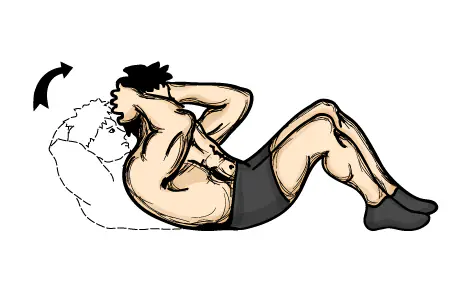
Crunches are the simplest and most common abs exercise, and a staple of almost every routine aimed at 6 pack abs. They look like a small sit-up. You lie on your back and curl your shoulders up off the floor, but your lower back stays down. Also known as stomach crunches, they mainly work the upper part of your abs.
Done well, crunches are a useful step towards a defined stomach. Rushed or sloppy reps strain your neck and lower back and do little for your abs. Below you will find the correct form step by step, followed by an honest look at what crunches can do for a flat stomach.
How are crunches different from sit-ups?
In a full sit-up you lift your whole back off the floor until you are sitting upright. In a crunch you only lift your upper back, so your shoulder blades leave the floor while your lower back stays flat on the mat.
That shorter range keeps the work on your abdominal muscles. In a full sit-up, the hip flexors at the top of your thighs take over for the second half of the movement. They can also tug on your lower back. Crunches avoid much of that, which is why they are usually the better choice for beginners.
Which muscles do crunches work?
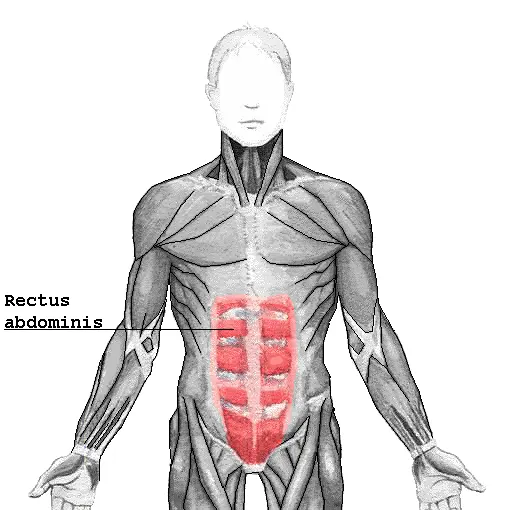
The main muscle is the rectus abdominis. This is the long, flat muscle running down the front of your stomach from your ribs to your pelvis. Bands of tissue cross it, and when body fat is low enough, they create the familiar six-pack look. Crunches work the upper part of this muscle hardest.
The obliques at your sides help to steady you, especially if you add a twist. Your deep core muscles also switch on to keep your trunk stable. To see how these muscles fit with the rest of your body, take a look at our muscle map.
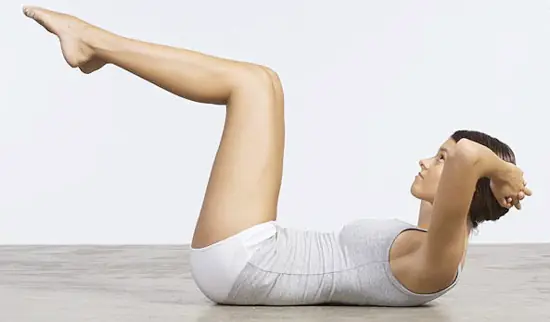
Correct form for crunches, step by step
Good form matters more than speed. Crunching quickly with jerky movements will not help you at all, and it is a common cause of neck strain, back pain and even spine injury. Follow these steps and take each rep slowly.
Getting into position
- Lie on a wide bench, or on the floor on a mat or carpet.
- Bend your knees and keep your feet flat on the floor.
- Either rest your hands lightly behind your neck or cross them over your chest. Crossing them over your chest is easier on your neck if you are new to the exercise.
Doing the crunch
- Breathe out and use your abdominal muscles to curl up and forward, lifting your shoulders towards the ceiling.
- Squeeze your abs at the top for a moment.
- Breathe in and slowly lower yourself back to the starting position.
- Begin the next crunch once your shoulders touch the floor.
- Keep your body as straight as possible and your face pointing up throughout.
- Keep your lower back flat against the floor for the whole movement.
Watch how it is done
This short video shows the movement clearly. Notice how slow and controlled each rep is, and how the lower back never lifts away from the floor.
Common mistakes and how to protect your back
- Pulling on your head. If your hands are behind your neck, they should only support it. Never yank your head forward to get up.
- Tucking your chin hard. Leave a gap about the size of a fist between your chin and chest so your neck stays relaxed.
- Arching your lower back. Your back should stay flat and straight at all times. This is the simplest way to avoid injury.
- Rushing. Fast reps use momentum rather than muscle. Slow down and feel your abs do the work.
If your back aches during crunches, raise your feet onto a bench or step to make the exercise easier. If the pain continues, see a GP or physiotherapist. Crunches also feature in our guide to injury-prone gym exercises, which explains more about protecting your neck.
Will crunches give you a flat stomach?
On their own, no. Crunches strengthen and build the abdominal muscles, but they do not burn fat from your belly in particular. Your body draws on fat stores all over, rather than from the area you happen to be working.
So if your main goal is a flat stomach, start by reducing your overall body fat. Our guide on how to reduce fat explains how to do that through diet and exercise. Once your body fat comes down, the muscle you have built with crunches will start to show. Crunches stay a core exercise for building abs, even though they will not strip away fat by themselves.
What actually helps you lose belly fat?
Fat loss comes down to using more energy than you take in, over weeks and months. A few habits make that much easier to stick to:
- Eat a little less than you burn each day. Our daily calorie intake calculator gives you a starting figure.
- Build meals around lean protein, vegetables and fibre-rich foods, which keep you full for longer.
- Combine regular cardio, such as brisk walking or cycling, with strength training for the whole body.
- Cut back on sugary drinks and alcohol, which add calories without filling you up.
- Get enough sleep, as tiredness makes it harder to stick to good eating habits.
How many crunches should you do?
Aim for 3 sets of 15 to 20 repetitions, resting about a minute between sets. Two or three sessions a week is plenty, as your abs need time to recover like any other muscle.
Once 20 slow reps feel easy, make the exercise harder rather than simply doing more. Hold each squeeze at the top for two seconds, or try a reverse crunch, where you lift your hips instead of your shoulders. Bicycle crunches bring in the obliques. Planks are a good partner exercise for a stronger core overall. A few minutes of abs work at the end of a gym session is enough for most people.
For more abs exercises and routines, explore our 6 pack abs section and build a plan that suits you.